Putting It All Together: Your Personalized Amari Method Practice
You've learned about suspension squats, hand balancers, power posture, vertical drops, passive and active bridges, spinal wave, spring step, and jaw align. That's a lot of information. It might feel overwhelming. You might be wondering: "Do I need to do all of these? In what order? How do I even begin?"
Here's the truth that makes the Amari Method different from every other pain relief system: you don't have to do everything. You're not following a rigid protocol. You're building your own personalized practice by gravitating toward what calls to you. The exercises that feel right for your body, that address your specific pain, that fit into your life—those are the ones you do.
This article will help you understand how to put it all together in your own unique way, find your rhythm, and build a sustainable practice that actually works for your real life.
The Core Philosophy: Life Is a Balancing Act
Imagine your arms stretched out to the sides. One arm is working too hard, straining, tense. The other arm is weak, underworked, barely engaged. This is imbalance—and it's exactly what's happening in your body right now.
Some muscles are chronically overworked because other muscles aren't working enough. Your shoulders are tight because your mid-back is weak. Your neck hurts because your shoulder blades don't retract properly. Your low back aches because your hip flexors are locked up.
The entire Amari Method is about rebalancing: getting the underworked parts to work more so the overworked parts can work less. Every exercise addresses a different part of this balancing act. And your body knows which parts need the most attention right now.
Gravitate Toward What Calls to You
Your body has wisdom. When you read about an exercise and think "Yes, THAT'S what I need," listen to that. When you try a practice and it feels exactly right, like your body has been waiting for this—stay with it. That's not random. That's your nervous system telling you where the imbalance is strongest.
If You Have Low Back Pain
Stay on the ground. Focus on:
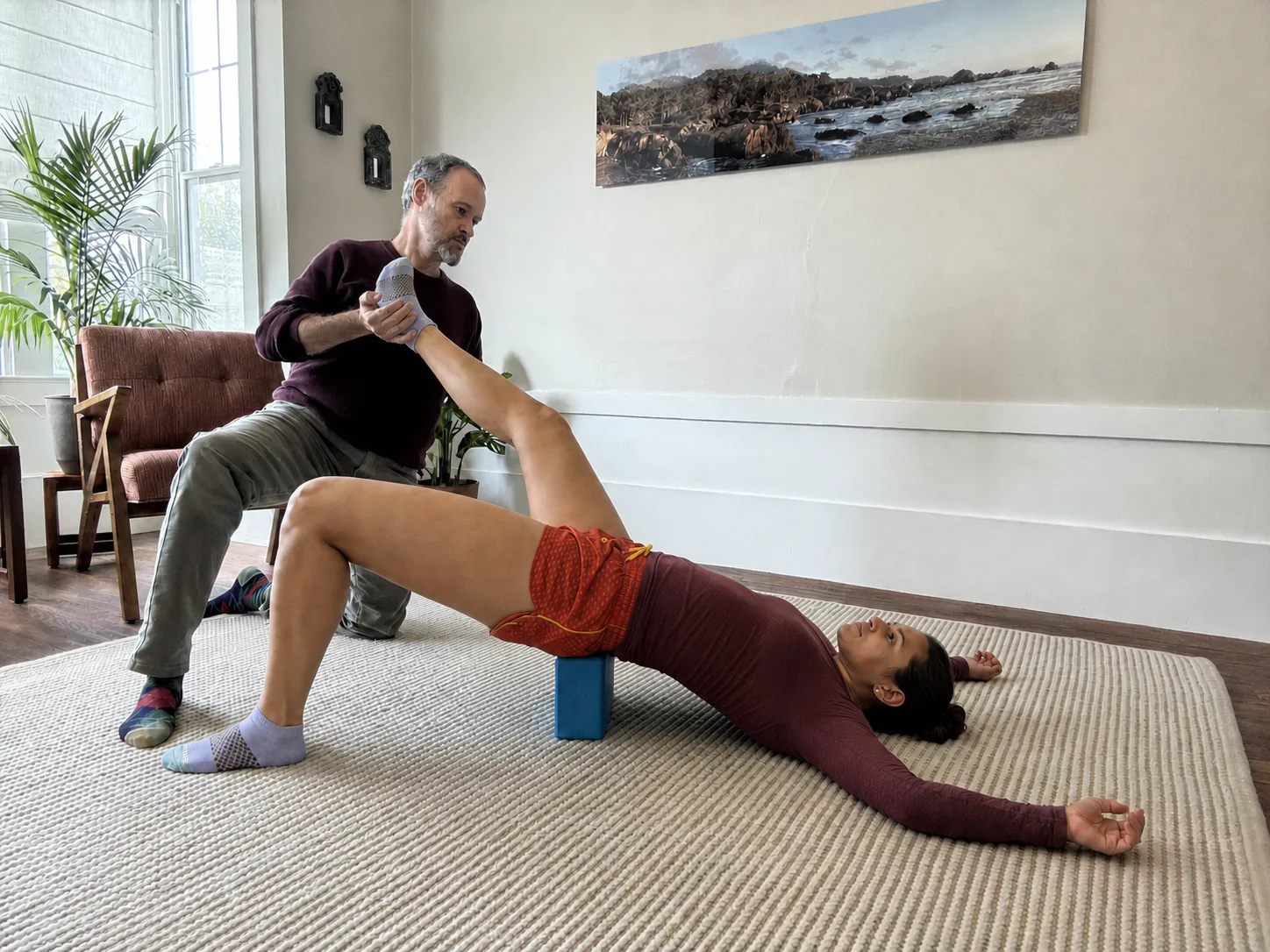
- Passive bridge: Restore spinal mobility and hip flexibility
- Active bridge: Build spinal strength and stability
- Spinal wave: Gentle decompression for deep release
You don't need to hang or work on your jaw right now. Your body is calling you to the ground work—listen to it.
If Your Hands Hurt (Carpal Tunnel, Wrist Pain)
Stay with the hand and arm work:
- Hand balancer: Rebalance flexor-extensor muscle imbalance
- Suspension squat (focus on grip): Awaken your posterior chain through hand strength
You can skip the jaw and ankle work for now. Focus where your pain is loudest.
If You Have TMJ Pain, Jaw Clicking, Headaches
Start with jaw and posture:
- Jaw align: Rebalance jaw muscles and reverse TMJ dysfunction
- Power posture: Fix forward head posture that's compressing your jaw
You might eventually add vertical drop for neck decompression, but begin where the pain lives.
If You Have Ankle Stiffness or Plantar Fasciitis
Focus on lower body decompression:
- Spring step: Decompress achilles and eliminate heel pain
- Passive bridge: Release hip flexors that affect lower leg mechanics
If You Just Feel Tight, Compressed, Stuck Everywhere
Start with decompression work:
- Vertical drop: Decompress your entire spine
- Suspension squat: Full-body decompression and posterior chain awakening
- Spinal wave: Gentle release for deep, stuck tension
The Pattern: Gravitate to what is calling to you. If you're here for a specific pain, start there. Your body knows what it needs most urgently. Trust that wisdom.
Each Modality Is a World Unto Itself
Here's something that might surprise you: the exercises you learned in the videos are just the beginning. Each individual exercise evolves as your body changes. The suspension squat you do today will look and feel different in three months. The passive bridge progresses through layers of depth you can't imagine yet.
Each modality is amazingly subtle. As you practice:
- Your body changes: Muscles that were locked start to release. Joints that were compressed begin to decompress.
- The exercise deepens: You discover micro-adjustments that unlock new layers of relief.
- You need guidance: Fine-tuning becomes essential as you progress beyond the basics.
This is why the Amari Method isn't just a video course—it's an ongoing relationship with your body, often with guidance to help you evolve the practices as you change.
Finding Your Rhythm: Creating a Sustainable Practice
You don't need to do everything every day. The goal isn't perfection—it's consistency with what actually serves your body right now.
Sample Daily Practices (Pick What Calls to You)
Minimal Practice (5-7 Minutes)
- Choose 1-2 exercises that address your primary pain
- Example for low back pain: Passive bridge (3 min) + Spinal wave (3 min)
- Example for neck pain: Power posture (2 min) + Vertical drop (3 min)
Moderate Practice (15-20 Minutes)
- Choose 3-4 exercises covering different areas
- Example full-body: Suspension squat (5 min) + Passive bridge (5 min) + Power posture (3 min) + Spring step (3 min)
- This hits posterior chain, hips, posture, and ankles
Deep Practice (30-45 Minutes)
- Work through most or all exercises in a flowing sequence
- Example complete practice:
- Hand balancer (3 min)
- Suspension squat (7 min)
- Vertical drop (5 min)
- Power posture (3 min)
- Passive bridge (8 min)
- Active bridge (5 min)
- Spinal wave (5 min)
- Spring step (3 min)
- Jaw align (3 min)
The Rotating Approach
Many people find success rotating focus areas throughout the week:
- Monday: Upper body focus (hand balancer, power posture, vertical drop, jaw align)
- Wednesday: Lower body focus (passive bridge, active bridge, spinal wave, spring step)
- Friday: Full-body integration (suspension squat, vertical drop, passive bridge, spring step)
This keeps practice fresh, prevents burnout, and ensures all areas get attention over time.
The Gift Each Exercise Brings
Every exercise has something unique to offer. As you explore the system, you'll discover what each one unlocks:
- Suspension squat: Awakens your entire posterior chain through the domino effect—grip strength cascades through your whole body
- Hand balancer: Rebalances flexor-extensor imbalance in hands and forearms, eliminating carpal tunnel and wrist pain
- Power posture: Retrains shoulder blades to pull back and down, reversing forward head posture
- Vertical drop: Decompresses your entire spine through locked-elbow hanging—vertebrae self-adjust
- Passive bridge: Restores spinal mobility through gentle, permission-based movement
- Active bridge: Builds spinal strength and stabilizes loose joints—the exact opposite of sitting posture
- Spinal wave: Gentle decompression meditation—like floating on ocean waves
- Spring step: Decompresses achilles and calves—"hanging for the lower body"
- Jaw align: Rebalances jaw muscles through resistance, reversing TMJ disorder
Each practice has a gift. Some gifts you need right now. Others you'll discover later as your body changes.
Your Body Is Doing What You're Asking It to Do
Here's a powerful reframe: your body isn't broken. It's not betraying you. Your body is doing exactly what you've been asking it to do for years—sit hunched over, hold chronic tension, compensate for weak muscles with tight muscles, protect joints that don't move properly.
The Amari Method simply asks your body to do different things:
- Instead of compression, we ask for decompression
- Instead of chronic tension, we ask for balanced strength
- Instead of locked joints, we ask for restored mobility
- Instead of compensation patterns, we ask for proper muscle activation
Your body responds immediately when you give it better instructions. The relief you feel isn't magic—it's your body finally being asked to do what it was designed to do.
When to Seek Guidance and Fine-Tuning
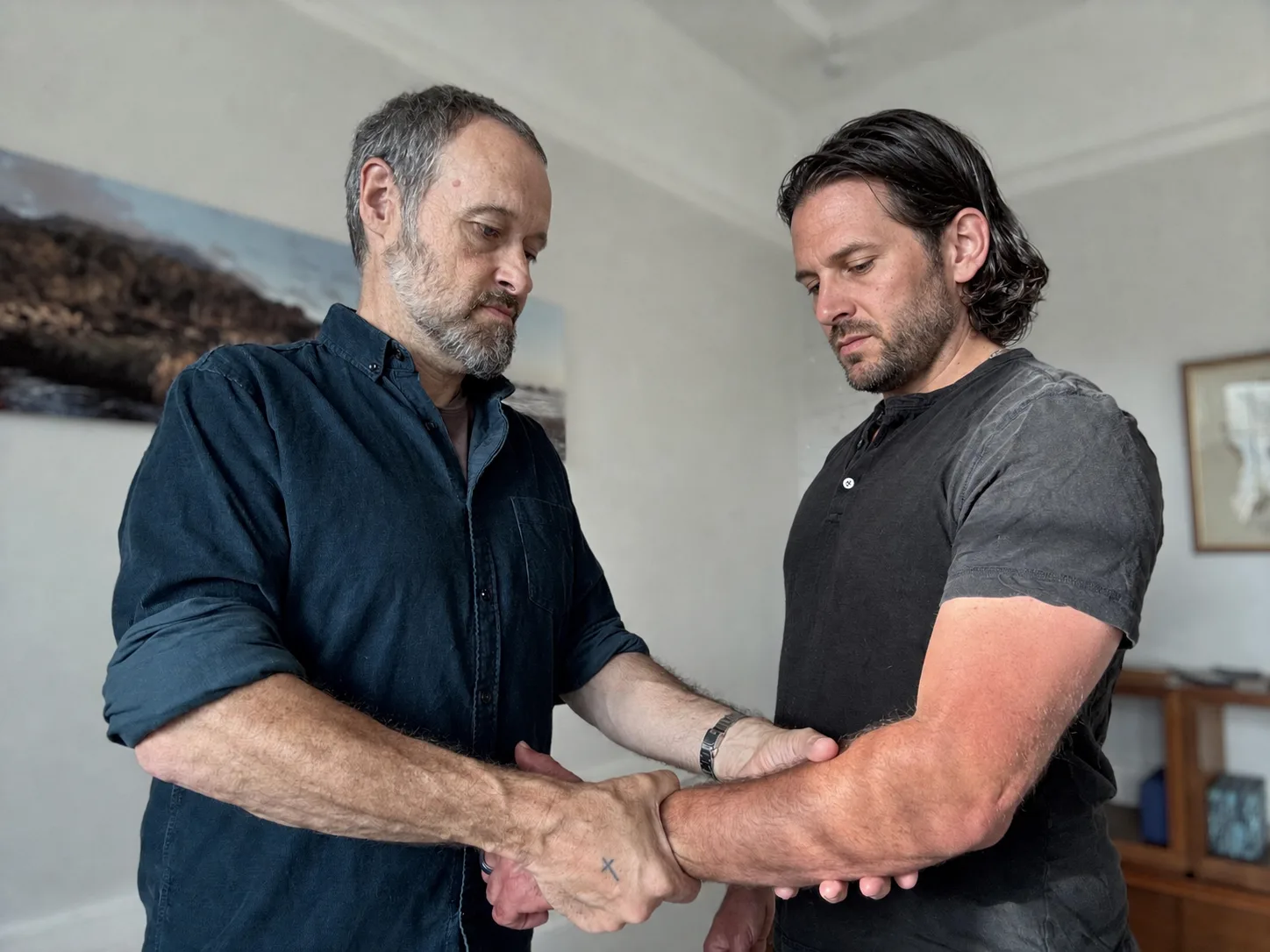
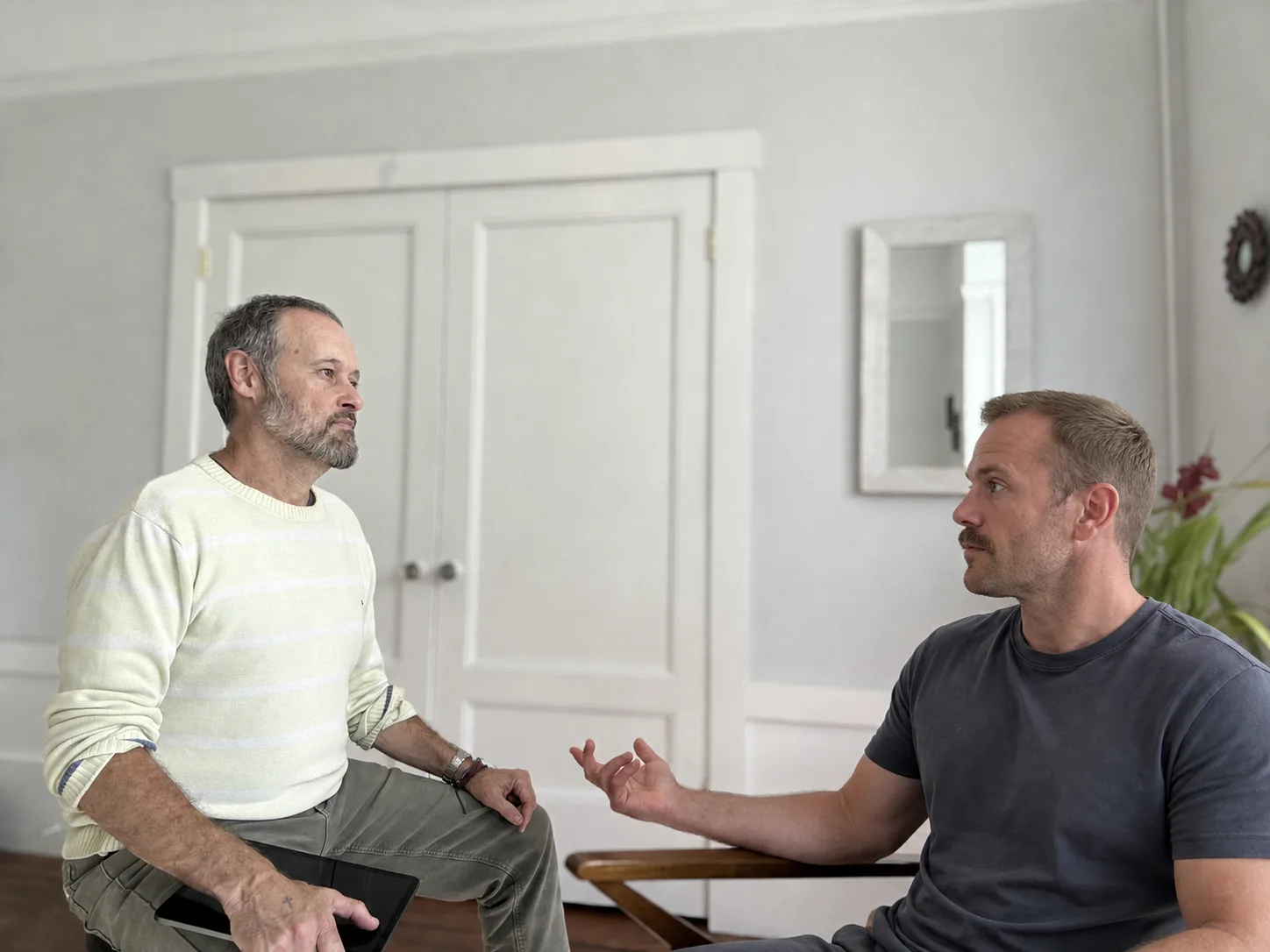
The Amari Method is designed to empower you to take control of your own wellbeing. The exercises work on their own. But as you progress, you'll likely benefit from guidance to:
- Fine-tune your form: Small adjustments create huge differences in results
- Progress exercises: Move from basic to advanced variations as your body changes
- Troubleshoot plateaus: Figure out why an exercise that worked stops working
- Customize for your unique body: Adapt exercises for your specific anatomy and pain patterns
- Add nuance: Discover subtle variations that unlock new layers of relief
Think of the exercises as a language. You've learned the vocabulary and basic grammar. Guidance helps you become fluent—expressing yourself with precision and depth.
Welcome to This New Chapter of Your Life
You now have the tools to create your own personalized pain relief practice. Start where your body is calling you. Gravitate toward what feels right. Build your rhythm. And know that guidance is available whenever you need help fine-tuning, troubleshooting, or deepening your practice.
Ongoing Support Available: Dr. Garrett and the Amari Method team are here to help you evolve your practice as your body changes—whether that's through in-person sessions, virtual consultations, or ongoing care programs.
→Start Your Personalized Practice →Schedule Free Discovery CallKey Takeaways
- You don't have to do everything—gravitate toward what calls to you and addresses your specific pain
- Your body knows what it needs—trust the wisdom of what feels right
- Life is a balancing act—get underworked parts working more so overworked parts can work less
- Each exercise is a world unto itself—practices deepen and evolve as your body changes
- Start small and build consistency—5-7 minutes daily beats 45 minutes once a week
- Your body isn't broken—it's doing what you've been asking it to do; now you're giving it better instructions
- Guidance accelerates progress—fine-tuning and customization unlock deeper layers of relief
Your Practice, Your Way
There is no "perfect" Amari Method practice. There's only the practice that works for your body, your schedule, and your life right now. That practice will change as you change. It will deepen as you discover new layers. It will evolve as different areas need attention.
What matters is this: you've taken the first step toward true, lasting relief. You're no longer dependent on treatments that only manage symptoms. You're building the skill of healing yourself from the inside out.
Welcome to this new chapter of your life. The journey has just begun.