The pain starts in your lower back or hip and shoots down the back of your leg. Sometimes it's a sharp, electric jolt. Sometimes it's a constant burning ache. Sitting makes it worse. Driving is miserable. You've searched "sciatica relief" at 2am because you can't sleep.
Sciatica is one of the most searched pain conditions online, and one of the most poorly treated. Most people cycle through painkillers, stretching routines, and maybe a cortisone injection without ever addressing why the nerve is being compressed in the first place. Here's what's actually going on, and what to do about it.
Sciatica isn't a diagnosis. It's a symptom. It means your sciatic nerve, which runs from your lower back through your hip and down each leg, is being irritated or compressed somewhere along its path.
The pain you feel in your leg isn't a leg problem. It's a signal that something upstream, in your spine or hip, is pressing on the nerve. Treating the leg pain without finding and correcting the compression is why most sciatica treatments provide temporary relief at best.
A bulging or herniated disc in your lower back presses on the nerve root where it exits the spine. But the disc didn't herniate randomly. Years of spinal compression, from sitting, poor movement patterns, and weak supporting muscles, created the conditions for the disc to fail. The herniation is the consequence, not the cause.
The piriformis is a small muscle deep in your hip. The sciatic nerve runs directly beneath it, and in some people the nerve actually runs through the muscle. When the piriformis tightens, from sitting, hip imbalance, or overuse, it can clamp down on the nerve and create symptoms identical to a disc herniation. This is frequently misdiagnosed and treated with the wrong approach.
As the spaces in your spine narrow over time, from compression, arthritis, or bone spurs, the nerves get squeezed. This is more common after 50 and tends to get worse with standing and walking, better with sitting or bending forward.
The most common and most overlooked cause. Years of sitting have compressed your lower spine, tightened your hip flexors, weakened your glutes and core, and created a body that's structurally predisposed to sciatic nerve irritation. There may not be one dramatic event, just a gradual buildup until the nerve has no room left.

Painkillers and anti-inflammatories turn down the pain signal but don't change anything structurally. The nerve is still compressed, and the inflammation returns as soon as the medication wears off because the cause is still there. Useful for getting through a flare-up, not a solution.
Generic stretching routines are a gamble without knowing the cause. If your sciatica is from disc compression, certain stretches can make it significantly worse by pushing the disc further into the nerve. Cortisone injections reduce inflammation around the nerve and can provide real relief, sometimes for weeks or months, but inflammation is the body's response to compression. If the compression doesn't change, the inflammation comes back.
Bed rest is one of the worst things people do for sciatica, despite it feeling logical when you're in pain. Prolonged rest increases spinal compression, weakens the muscles that should be supporting your spine, and tightens the hip flexors, all of which make the nerve compression worse over time.
Sciatica isn't a diagnosis. It's a symptom.Garrett
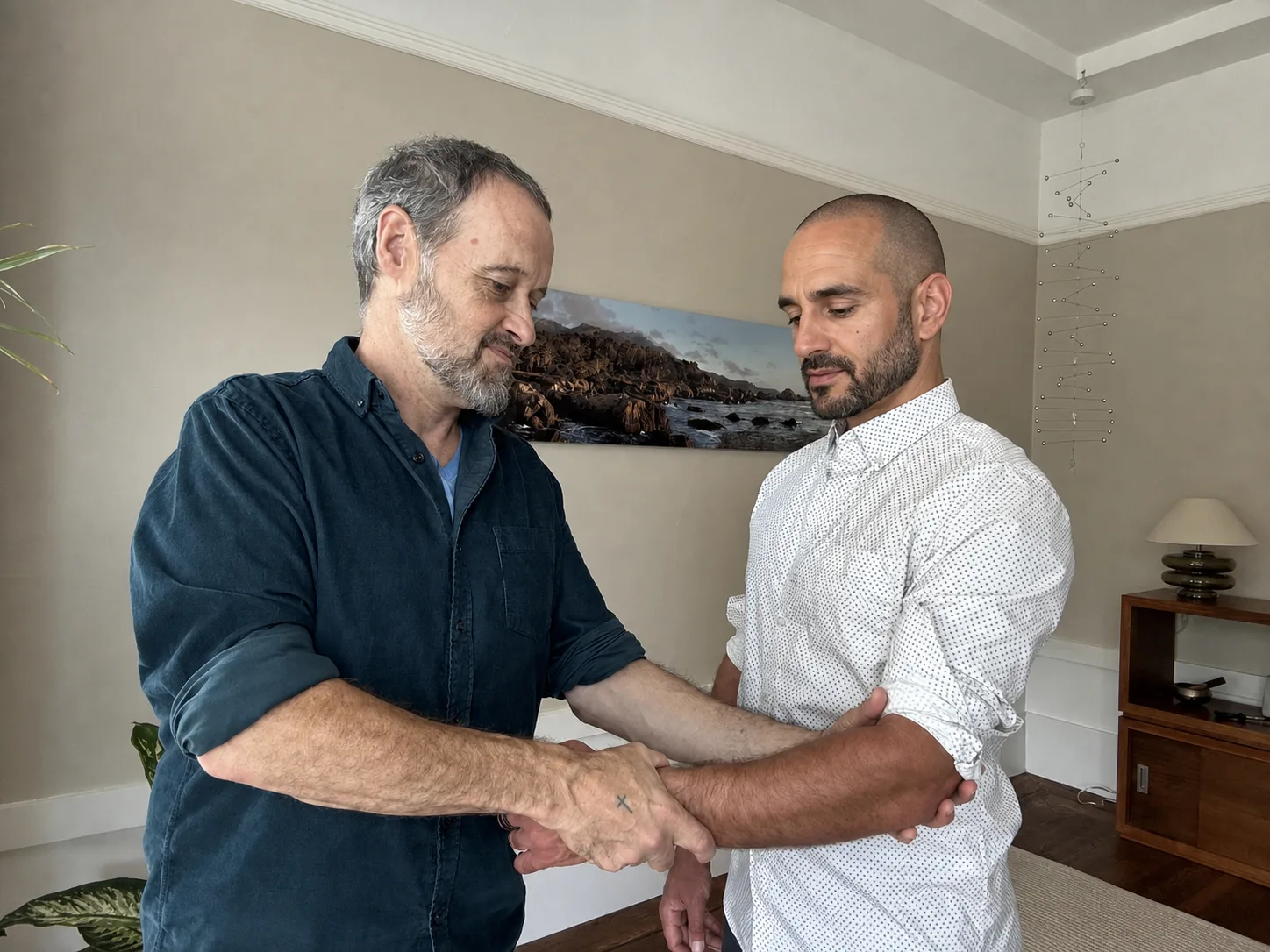
Disc, piriformis, or general compression. The treatment for each is different, sometimes opposite. A proper assessment identifies exactly where and why the nerve is being compressed. This single step is what separates people who recover quickly from people who struggle with sciatica for years.
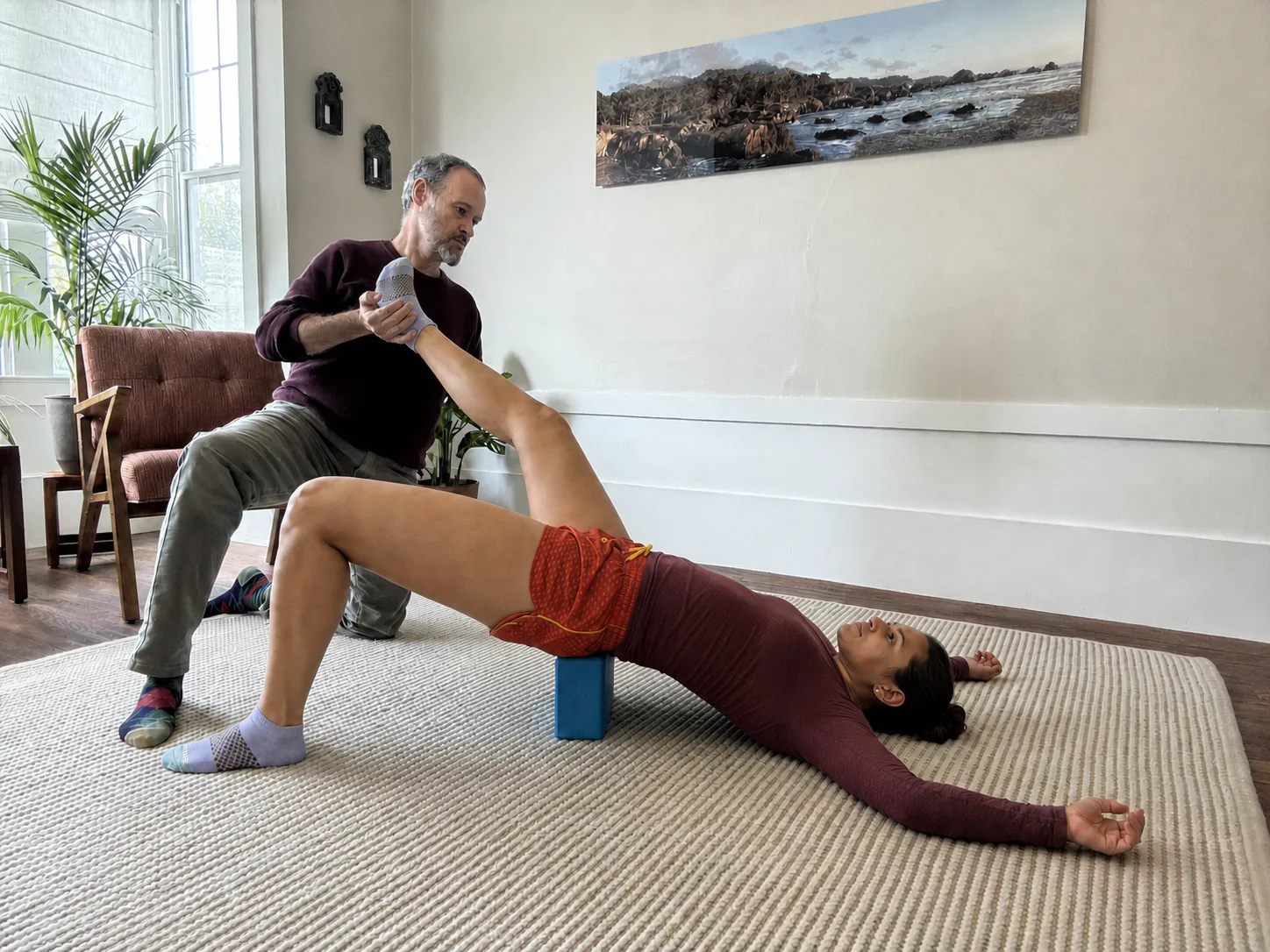
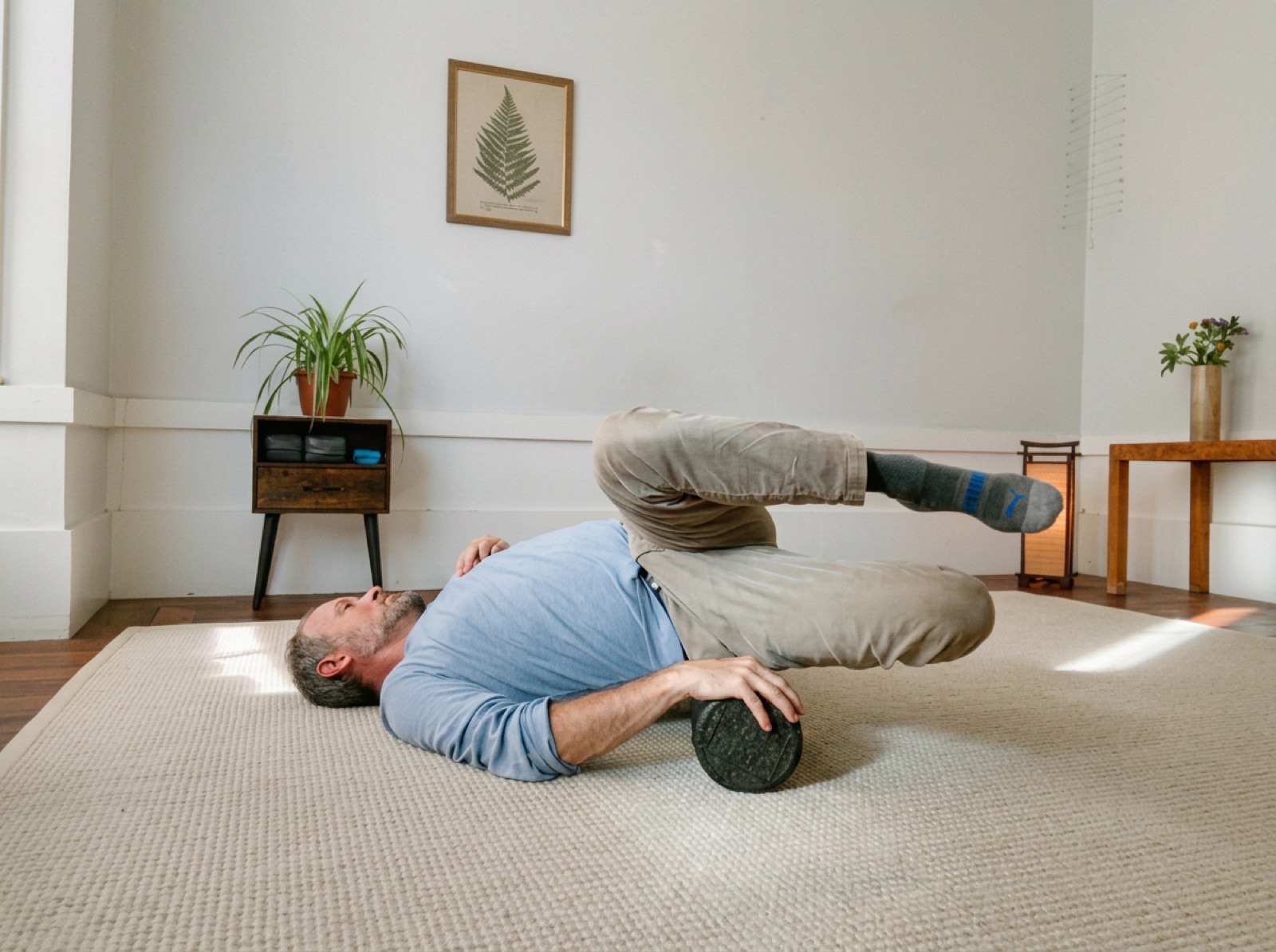
Whatever is compressing the nerve needs space. For disc-related sciatica, specific spinal decompression protocols create space between vertebrae and allow the disc to retract away from the nerve. For piriformis-related sciatica, targeted hip work releases the muscle's grip on the nerve.
Your hips and lower spine have likely lost range of motion from years of sitting and guarding. Once the acute compression is addressed, restoring mobility prevents the nerve from being re-compressed. This isn't aggressive stretching. It's gradual, guided mobilization that respects your body's pace of healing.
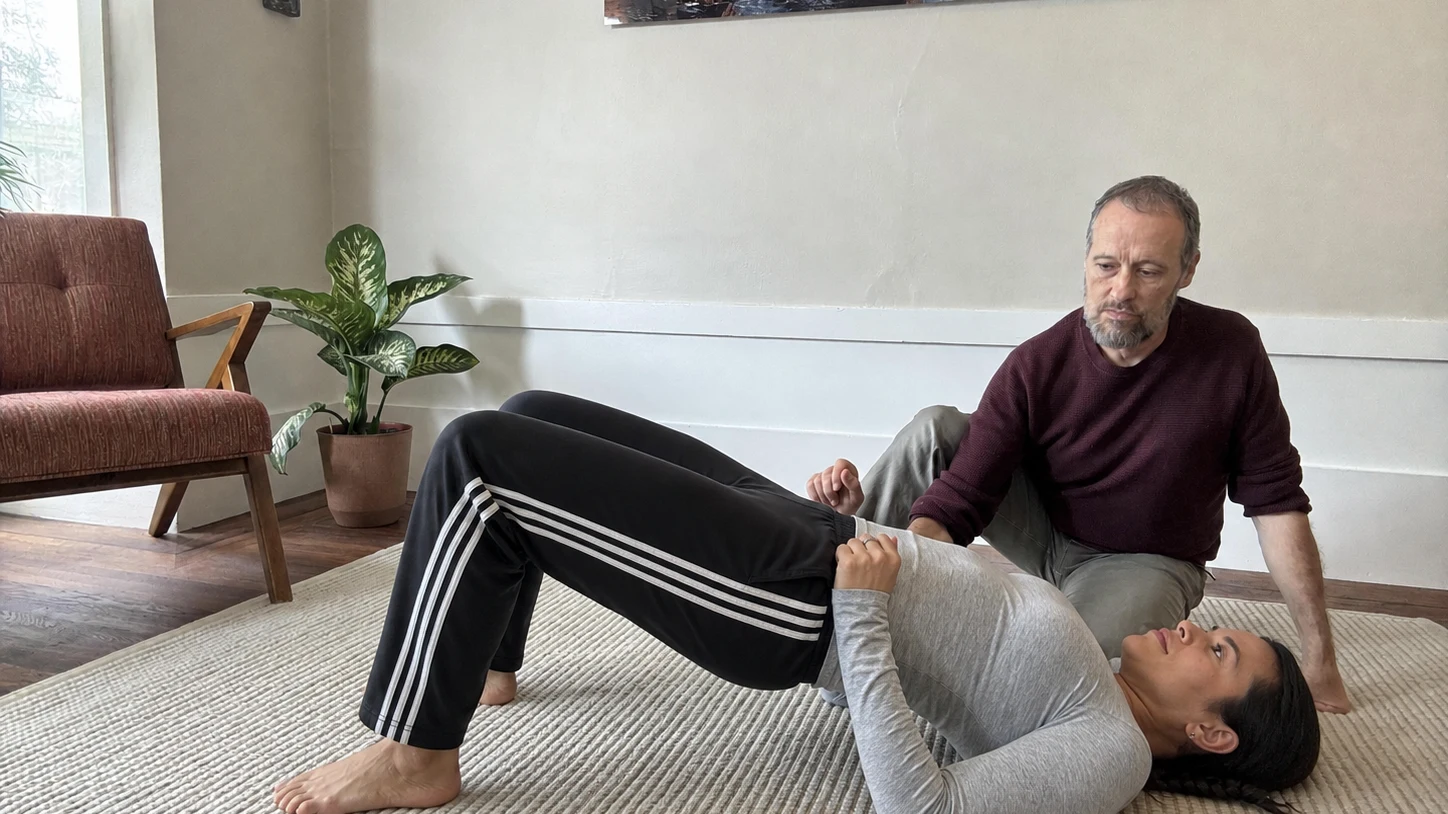
Quiet glutes, dormant deep stabilizers, and a deconditioned posterior chain created the conditions for the sciatica in the first place. Rebuilding this support is what prevents it from coming back. Most people skip this step because once the pain stops, they think they're done.
Sciatica doesn't come from a single event. It comes from accumulated patterns. A short daily practice that maintains decompression, mobility, and strength keeps the nerve pathway clear and prevents the conditions that led to compression from rebuilding.
Most sciatica, while painful, is not dangerous. Seek medical attention right away if you experience sudden severe weakness in your leg or foot, loss of bladder or bowel control (a medical emergency called cauda equina syndrome), numbness in the groin or inner thigh area, or progressive neurological symptoms like increasing numbness or weakness. These signs suggest nerve compression that may need immediate medical intervention.
Sciatica has a cause. Disc, piriformis, or general compression, each requires a different approach. Find yours in your first session with Garrett.

Garrett founded the Amari Method to resolve chronic pain by finding where the body's gone out of balance and correcting it. He sees practice members in San Francisco and offers virtual sessions nationwide.
Start with an Amari Assessment. Garrett will meet you in person, move with you, and explain what a fuller practice could look like.
$29 · 50-minute in-person Assessment · San Francisco