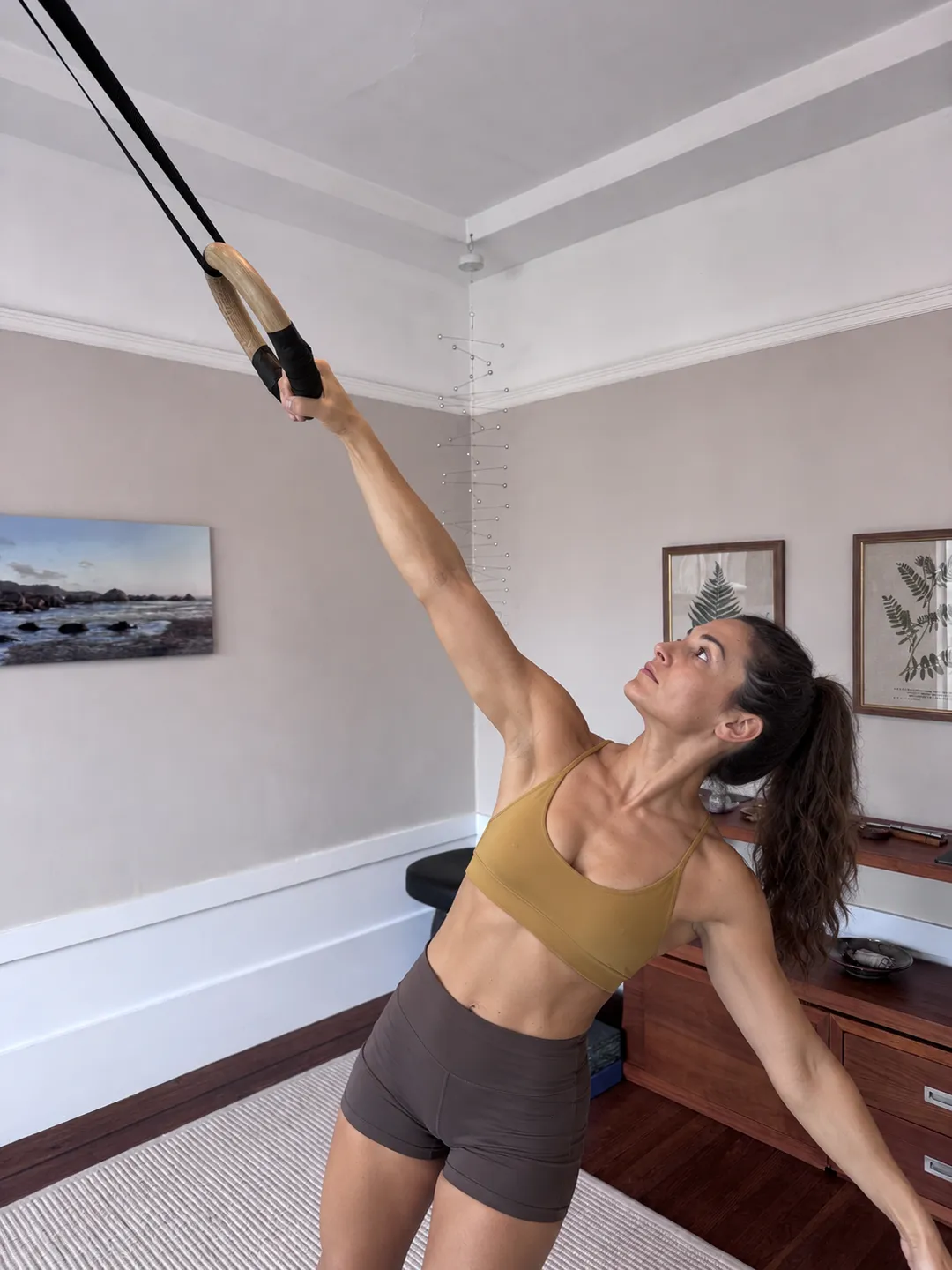
A shoulder can feel fine with your arm by your side and become painful when you reach for a cupboard, put on a jacket or lift something overhead. The restriction may show up in a sport you enjoy, or in a movement you used to do without thinking.
Reaching up, reaching behind you and supporting weight through your arm ask for different movements. The goal is to get those movements back with less pain, whether you need them for dressing, work or a sport you miss.
Amari offers hands-on guided movement to reduce pain and free up restricted movement. For shoulders, that means paying attention to how the arm, shoulder blade and rest of the body take part, with guidance that changes according to what you feel.
A shoulder is more than the spot that hurts
When you reach, your arm moves in relation to your shoulder blade and upper body. Garrett looks at that whole movement rather than judging the shoulder from a single position. He may notice an elbow locking or effort gathering around your neck before you are aware of it yourself. A small change in the guidance can help you feel what you were missing.
You might notice that you grip hard with your hand or tense your neck as you lift your arm. Paying attention to that effort gives us something specific to work with as we look for a less painful way to move.
Those observations do not establish the cause of the pain. Shoulder pain can have different causes, and a movement that looks similar from the outside can feel very different to two people.
More range and more control are different goals
Someone who cannot comfortably lift an arm overhead has a different starting point from someone who has plenty of movement but finds it difficult to support or control.
That is one reason Garrett does not give everyone with shoulder pain the same stretch. Opening farther is not the only measure of progress. Feeling supported in that movement matters too: you want to be able to use the range without working hard just to hold yourself there. A movement may become smoother, take less effort or feel easier to repeat before the distance changes much.
This gives you useful things to pay attention to besides how high your hand goes. Can you move without bracing through your neck? Does the effort stay where you expect it? Is it easier to stop and change direction?
What the rings add
The Suspension Squat article describes how Garrett uses hanging and supported positions to work with the hands, shoulders and spine together. Rings give him another way to change the setup and help someone feel an action that is difficult to find while standing upright.
How much support you use, how you hold the rings and what the rest of your body is doing all affect the experience. Garrett can change the angle, guide the shoulder blades or ask for less effort so you can find a movement that feels easier. The aim is to make reaching and lifting more available to you, not to get everyone into the same hanging position.
Read about the Suspension Squat and Power Posture.
A useful change should connect to your life
If reaching for a shelf brought you in, that remains relevant when you finish. If you want to get back to serving in tennis, the direction of the work is different from making your arms look more even at rest.
A first session can bring substantial relief or freer movement. Continued work gives you time to build on those changes, refine the movements and become more able to use them yourself. The aim is to return to the activities that matter to you, not to collect more exercises without knowing what they are for.
When shoulder pain needs medical attention
Get medical help promptly for sudden severe pain, an arm you cannot move, a changed shape, marked swelling, persistent loss of feeling or pain after an injury. Shoulder pain that is worsening or not improving also needs medical advice. See the NHS shoulder-pain guidance for more detail.
Amari does not diagnose or treat medical conditions. If guided movement is appropriate for you, read about working on shoulder pain in an Amari Assessment.