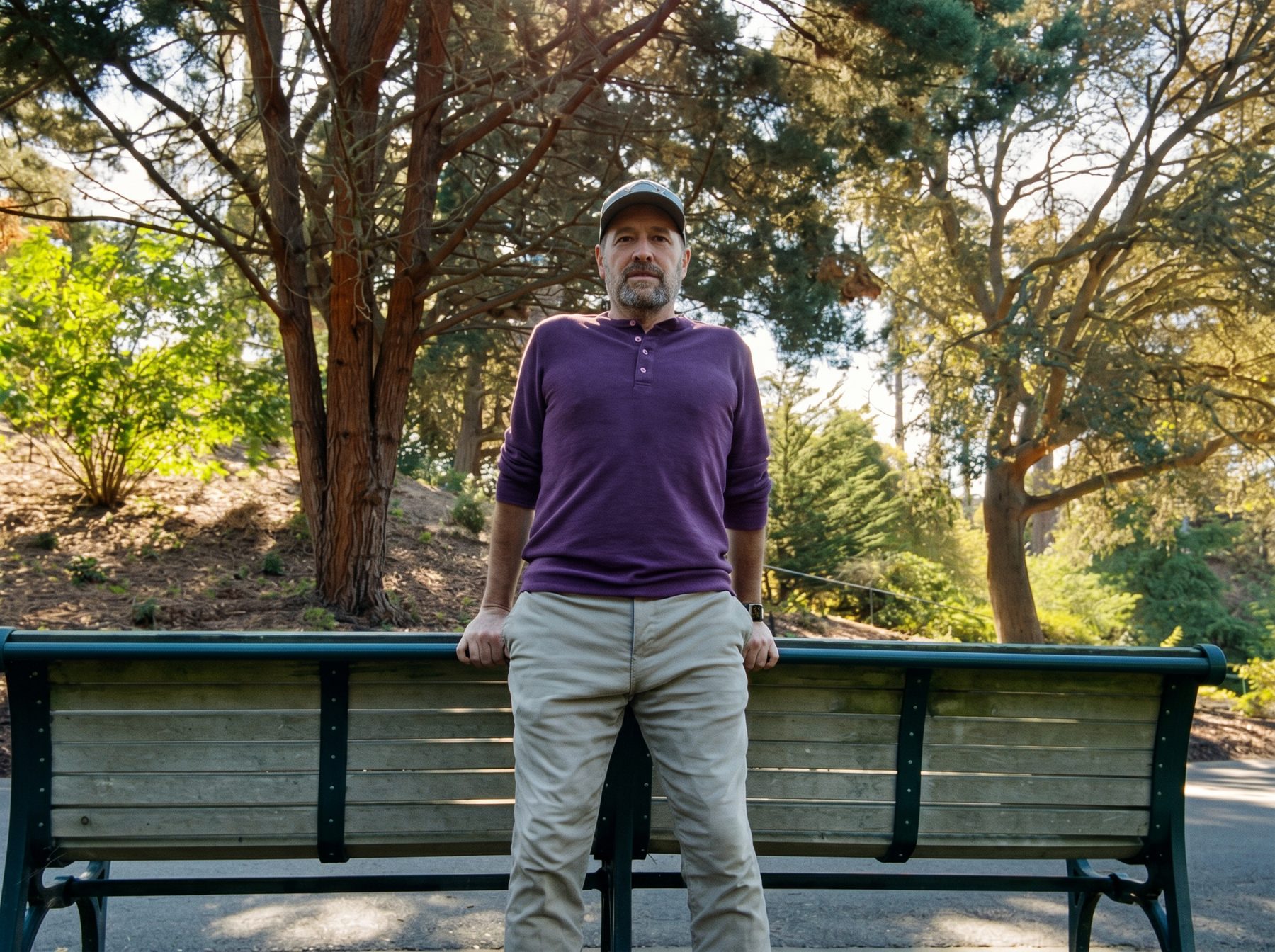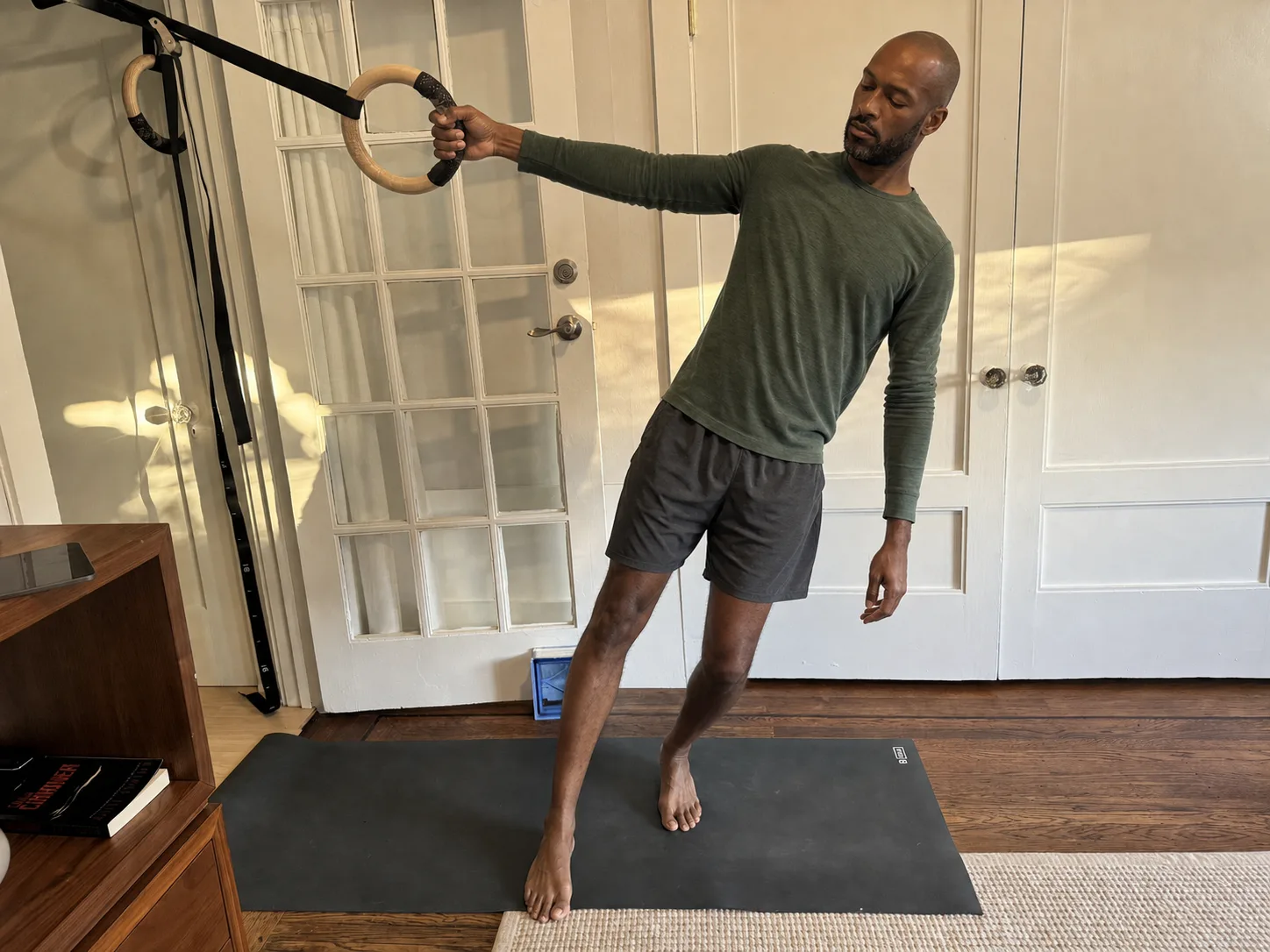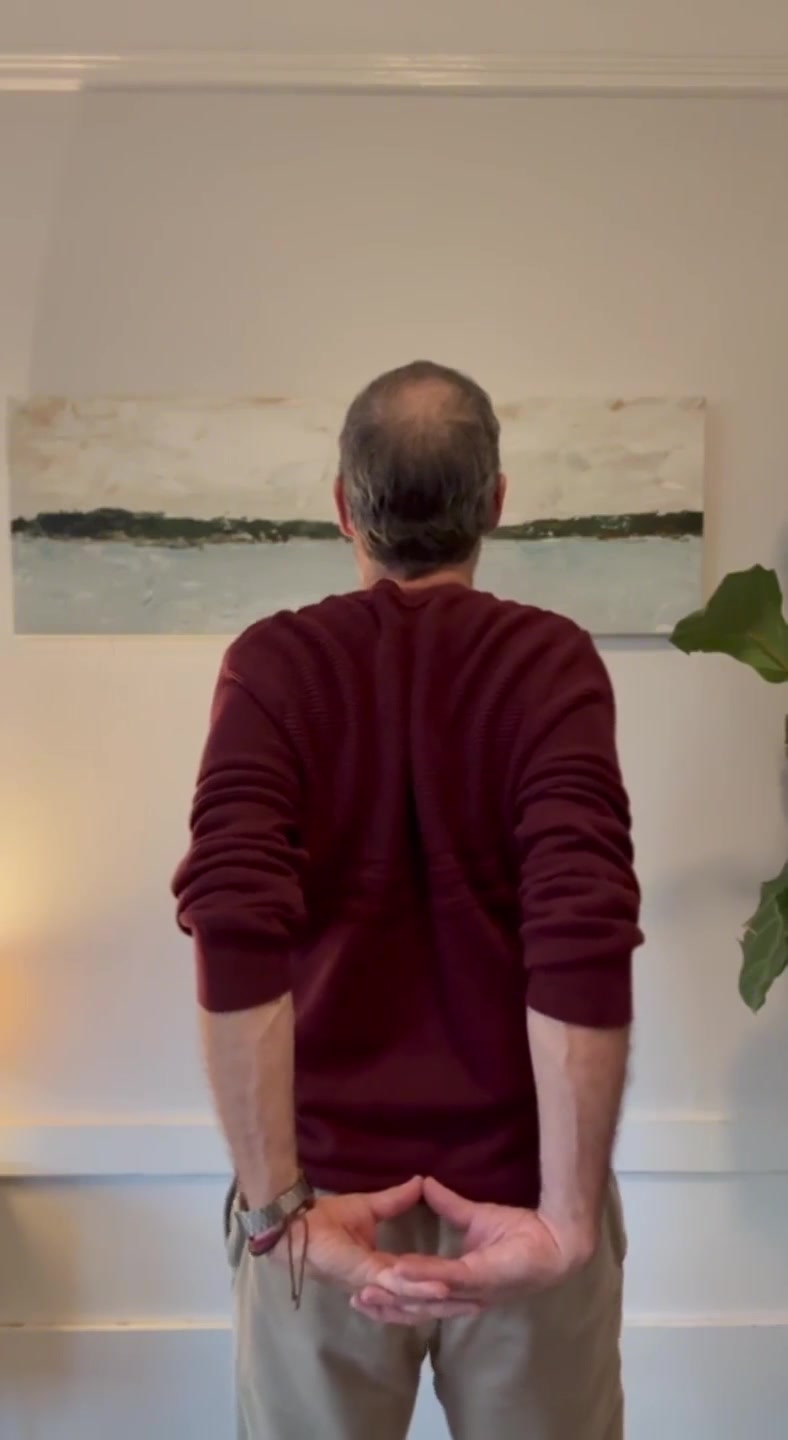
This is one of my favorite protocols. You can do it anywhere, it takes a minute or two, and it directly corrects the biggest postural problem I see in my practice.
We have a massive over-flexion problem in our culture. Almost everything we do all day pulls us forward: sitting at desks, looking at phones, driving, eating. Over years, your body adapts to that forward position. It becomes your default. That's when the pain starts.
Your head weighs 10 to 12 pounds. When it's sitting directly over your spinal column, your neck handles that weight easily. But when your head migrates forward, and for most people it's forward all day, all that weight pulls on the back muscles. They're working overtime.
Something is working too hard because something else isn't working enough. That's the imbalance. Your back muscles are overworking to hold your head up. The muscles in the front of your body aren't doing their share.
This causes more than neck and upper back pain. It cascades down the spine. Forward head posture contributes to lower back pain, hip dysfunction, even shoulder problems. The whole body is connected.
You've heard the advice a thousand times. Sit up straight. Pull your shoulders back. Stand with good posture. But we often don't know how to create that good posture, and we think it has to be someone else, a massage therapist or a bodyworker, who does it for us.
Telling yourself to sit straight requires constant conscious effort. You can hold it for five minutes, but as soon as you stop thinking about it, your body returns to its default collapsed position. You can't willpower your way through 16 hours of sitting.
What you need is to retrain your body so that proper alignment becomes comfortable again, so it becomes the position your body wants to be in.
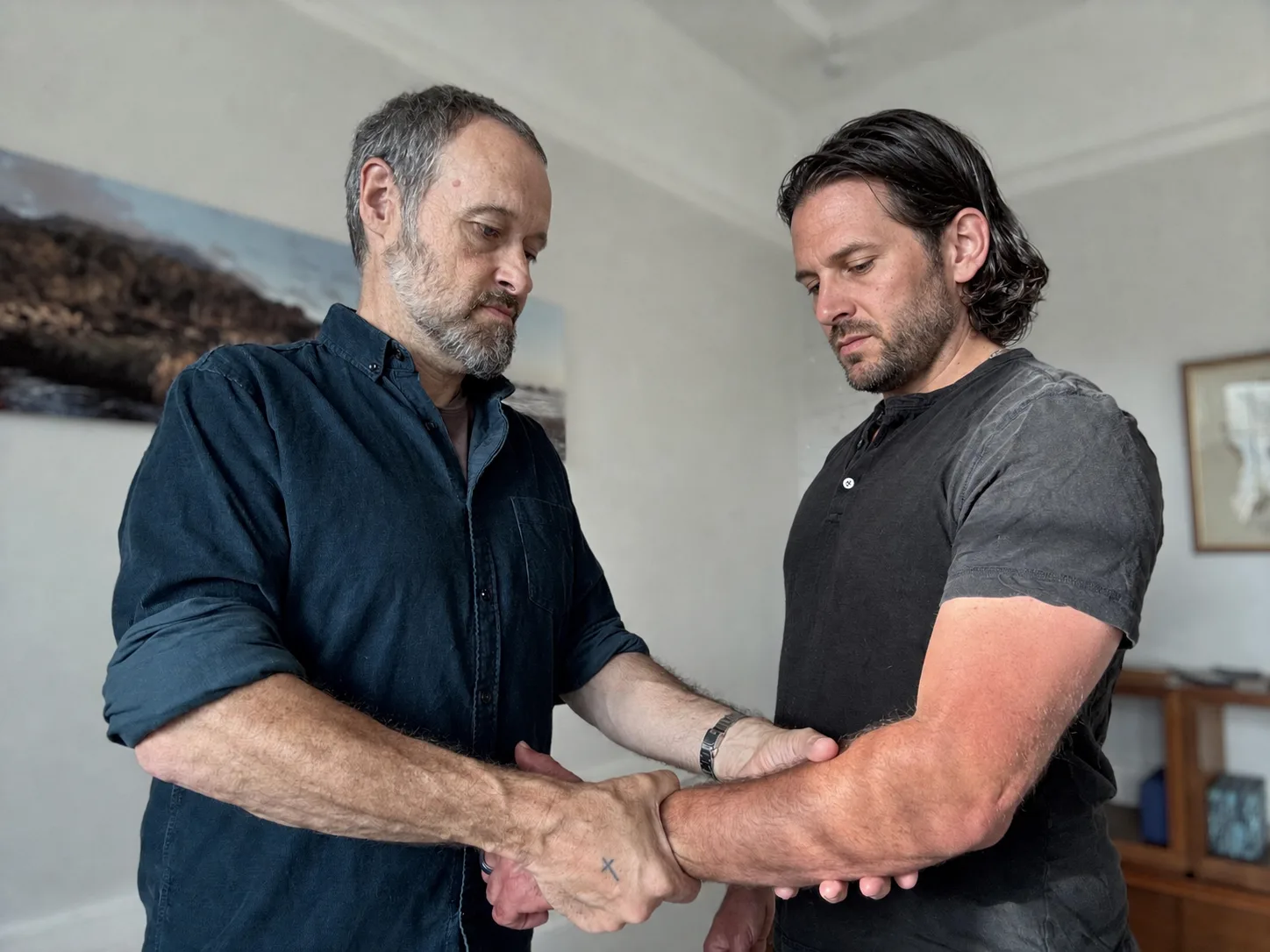
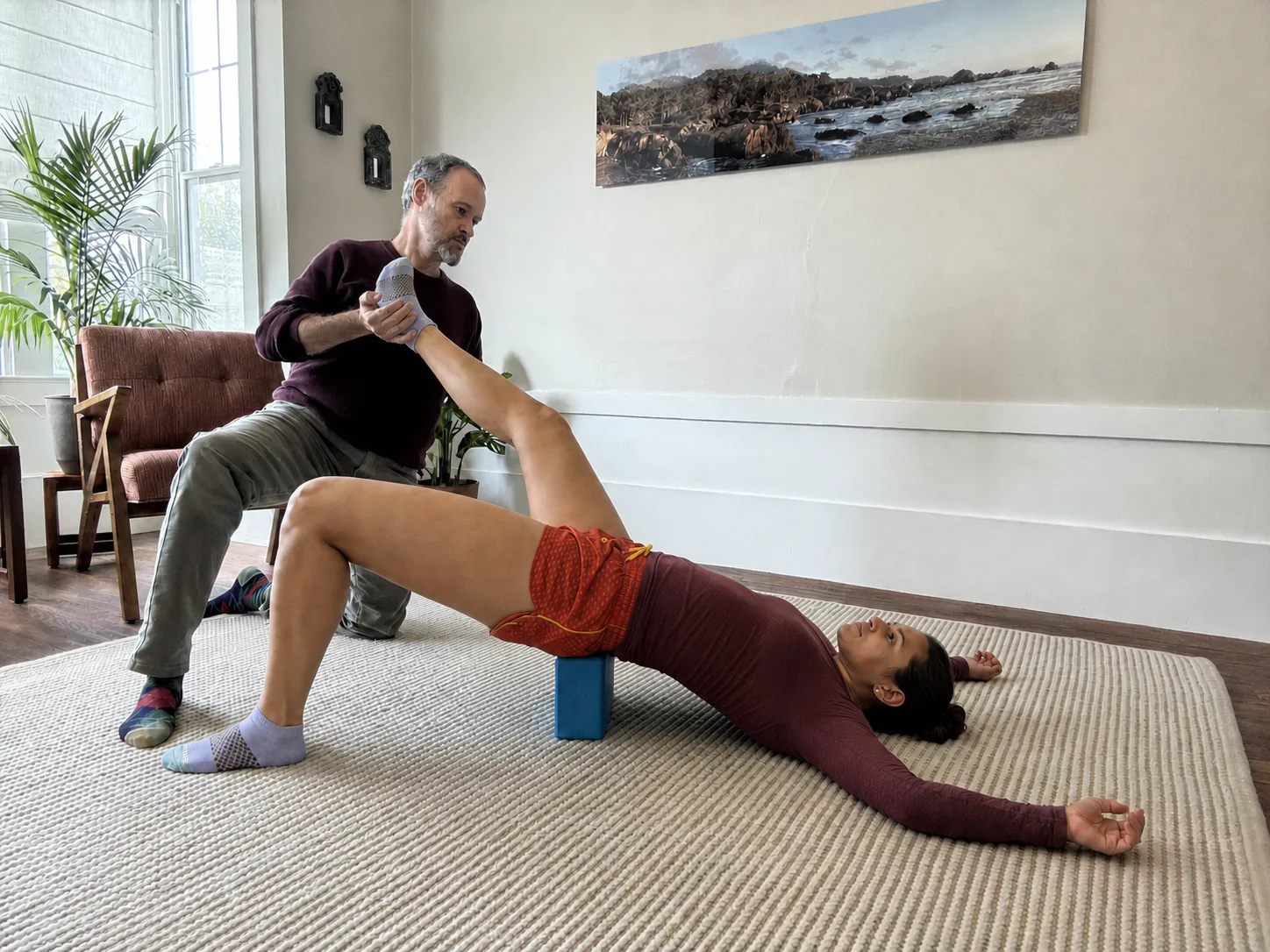
Power Posture targets the shoulder blades, the foundation of your upper body posture. When your shoulder blades are in the right position, everything else follows. Your chest opens. Your head comes back over your spine where it belongs. The back muscles that have been overworking all day finally get to relax.
The protocol also involves specific breathing patterns. When your chest is collapsed from sitting all day, your diaphragm can't fully expand. The way Power Posture combines movement with breathing opens everything up, and that carries over even after you're done.
When your shoulder blades are in the right position, everything else follows: the chest opens, the head comes back over the spine, and the back muscles that have been overworking all day finally get to relax.
A collapsed chest can't let the diaphragm fully expand. Power Posture combines the movement with a specific breathing pattern, and that opening carries over even after you're done.
Every time you do this, you're retraining your body. You're telling it: this is the position we want to be in. Over days and weeks, your body's baseline shifts. What used to take effort starts to feel natural. The exact technique matters though, how you position your hands, how you engage the shoulder blades, when you breathe, which is why Garrett teaches it in person.
You can't willpower your way through 16 hours of sitting.Garrett
Most approaches to posture correction are passive. Someone else adjusts you, someone else releases your muscles, but then you go back to sitting and the pattern returns. You're outsourcing your well-being.
Power Posture is the opposite. You're doing it yourself. You're building the strength and the muscle memory that keeps you in alignment without anyone else's help. That's what makes the results last, because you own the protocol. It's yours for life.
The protocol evolves with you too. As your body changes, the way you do Power Posture changes. It becomes more subtle, more nuanced. It's a world unto itself.
The first time, most people notice their upper back feels more open and their breathing feels deeper. Your head might feel lighter, because your neck muscles aren't straining to hold it forward anymore.
After a couple weeks of daily practice, the neck tension starts dropping. Your shoulders feel less rounded. You'll catch yourself in forward posture during the day and naturally correct it without thinking about it.
After a month, people tell me forward posture actually feels uncomfortable. That's when you know your body has retrained itself. The new baseline is aligned.
Unlike some of the other Amari Method protocols that need rings or a specific setup, Power Posture needs nothing. Do it at your desk, in line at the store, watching TV, waiting for a meeting. That's what makes it one of the most practical protocols in the whole system.
It only takes a minute or two. Some clients do it a few times throughout their workday as a reset. The key is consistency. Each time, your body gets a little easier to bring back into alignment.
If sitting all day has your shoulders rounding forward no matter what you try, we can help. See how the Amari Method finds the pattern behind it.
Garrett has spent 25+ years in hands-on practice. He built the Amari Method after using its own protocols to resolve his own carpal tunnel and plantar fasciitis.
Book a session with Garrett. If you don't experience noticeable relief, we keep working with you until you do, at no additional charge.
$29 · Amari Assessment · 50 minutes · San Francisco