Field Notes from the Practice

Notes on moving better, from the practice.

Exercise breakdowns, body mechanics, and observations from twenty-five years of clinical work. These guides introduce the method — the actual change happens in session.

Filter
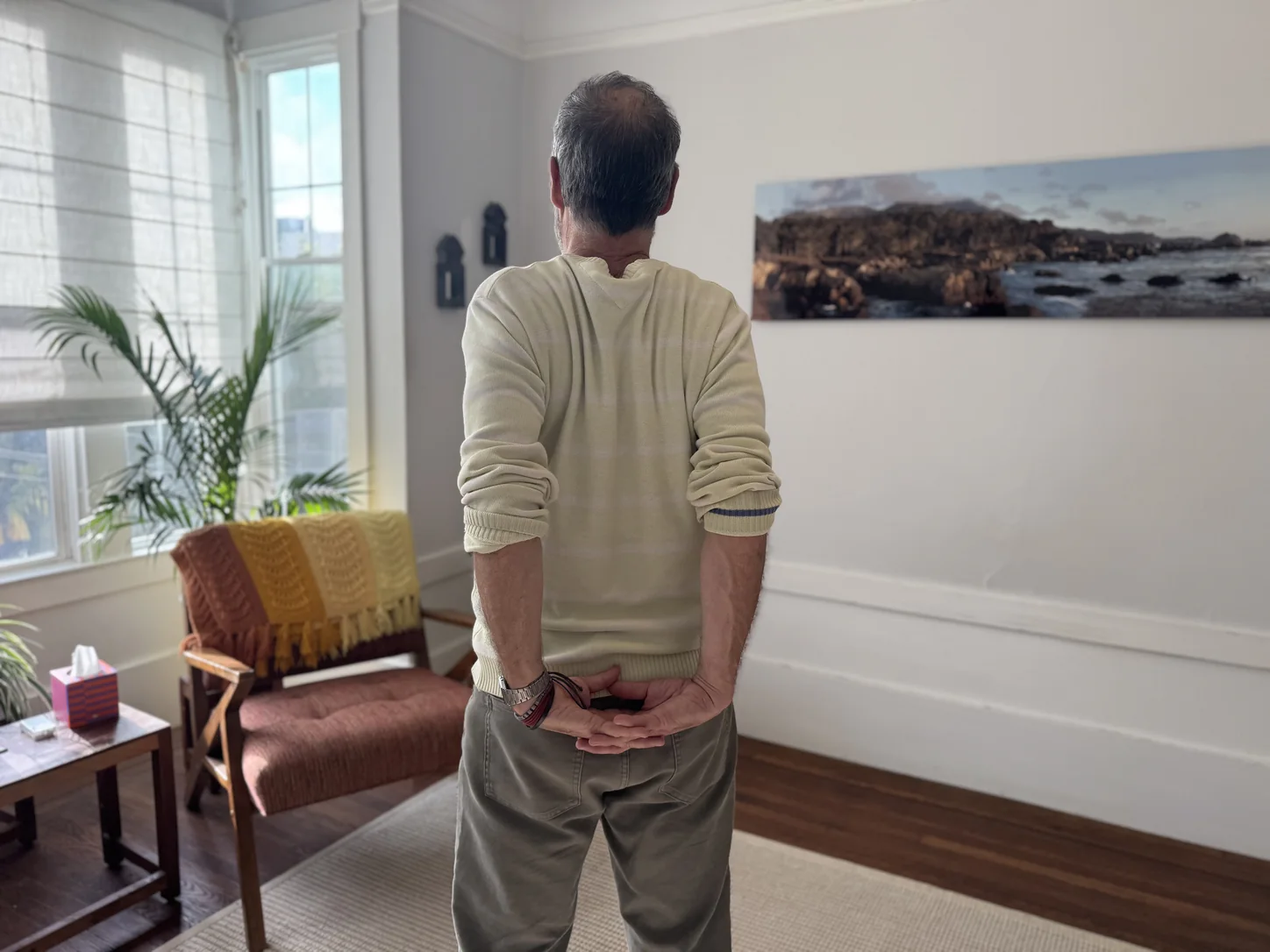
Garrett's pick Power posture protocol — squeezing shoulder blades together to correct forward-leaning posture
Posture 5 min read

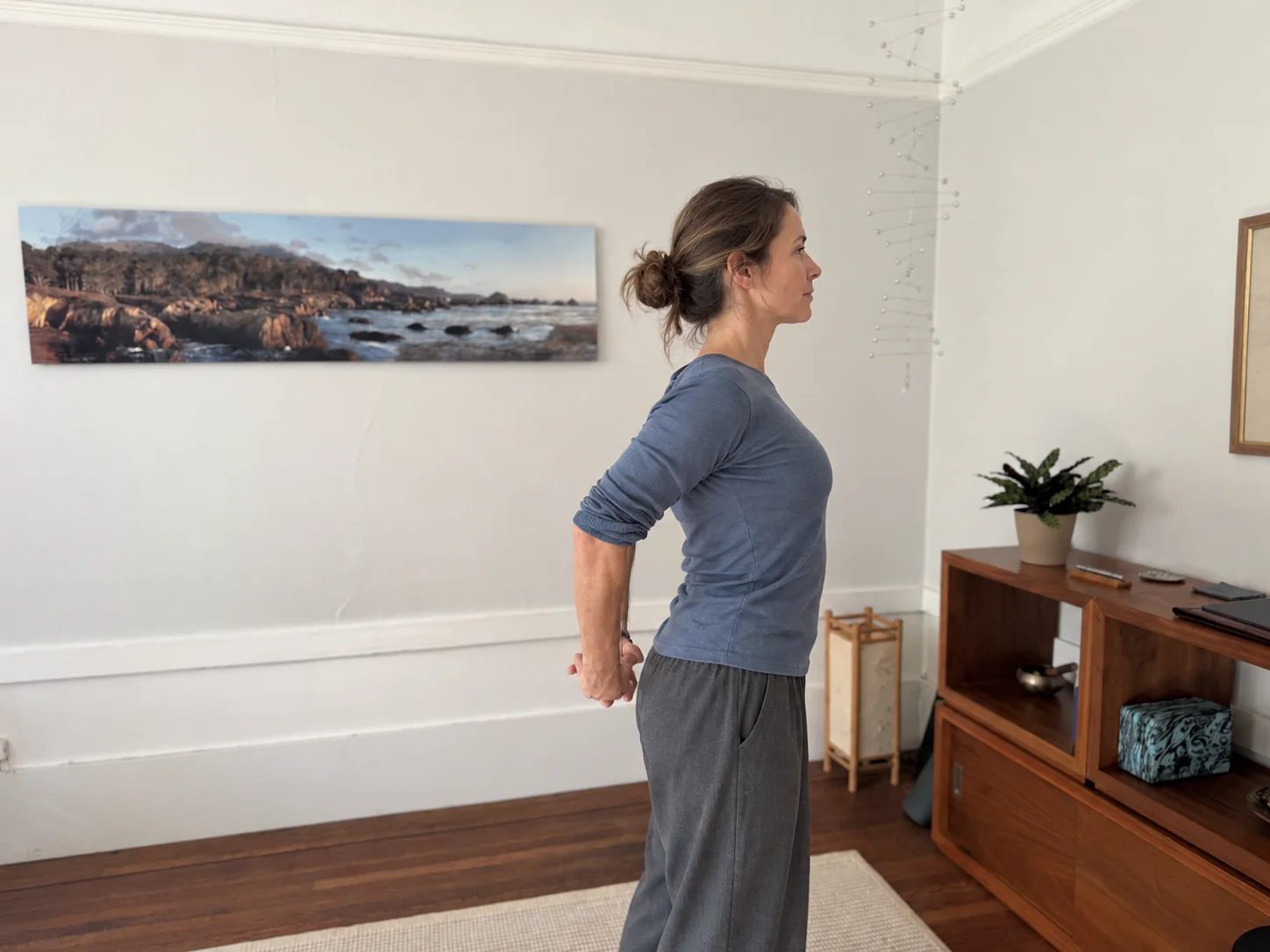
Power Posture: undo the damage from sitting all day.

There's a massive over-flexion problem. Your back muscles are working too hard because the front isn't working enough. Power Posture corrects that — in two minutes a day, anywhere.

The protocols.

11 entries
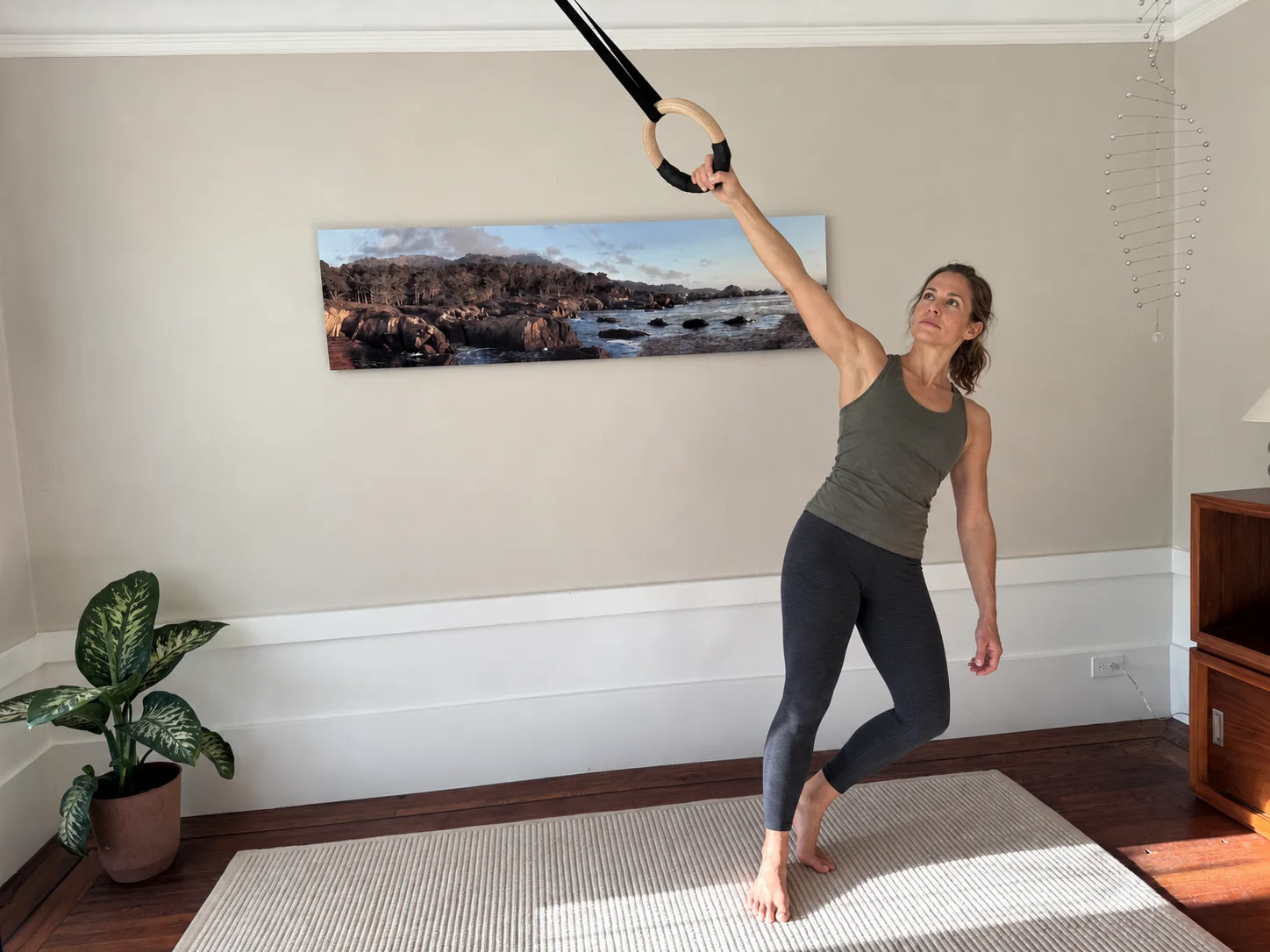
Hands gripping gymnastics rings demonstrating suspension squat hanging protocols for grip strength and body alignment
Protocol9 min read

Suspension squat: hanging protocols that cascade through your chain.

Hanging awakens your posterior chain through the domino effect. Grip strength cascades through your entire body — pulling shoulders, ribcage, and pelvis back into alignment without you having to think about it.

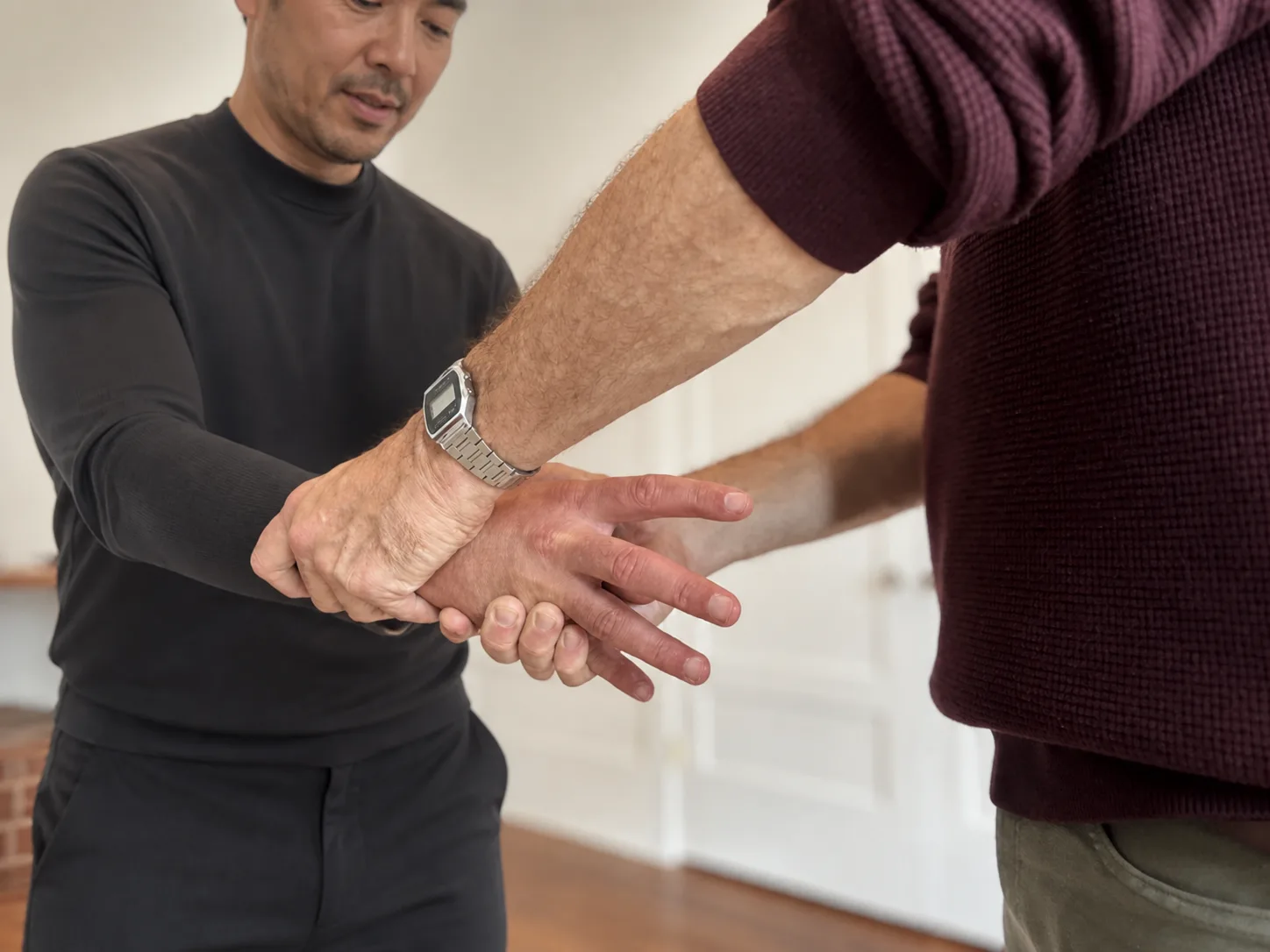
Hand balancer protocol demonstration for carpal tunnel relief and hand pain treatment
Protocol8 min read

The hand balancer: a fix for carpal tunnel the wrist brace can't reach.

Hand muscle imbalance — not the median nerve — is what causes most carpal tunnel. Restore flexor-extensor balance and the compression resolves on its own.

Vertical drop protocol for spine decompression and shoulder tension relief
Protocol8 min read

Vertical drop: decompress the spine in ninety seconds.

Release decades of compression and shoulder tension with locked-elbow hanging. Your vertebrae self-adjust as the spine decompresses — gravity does the work.

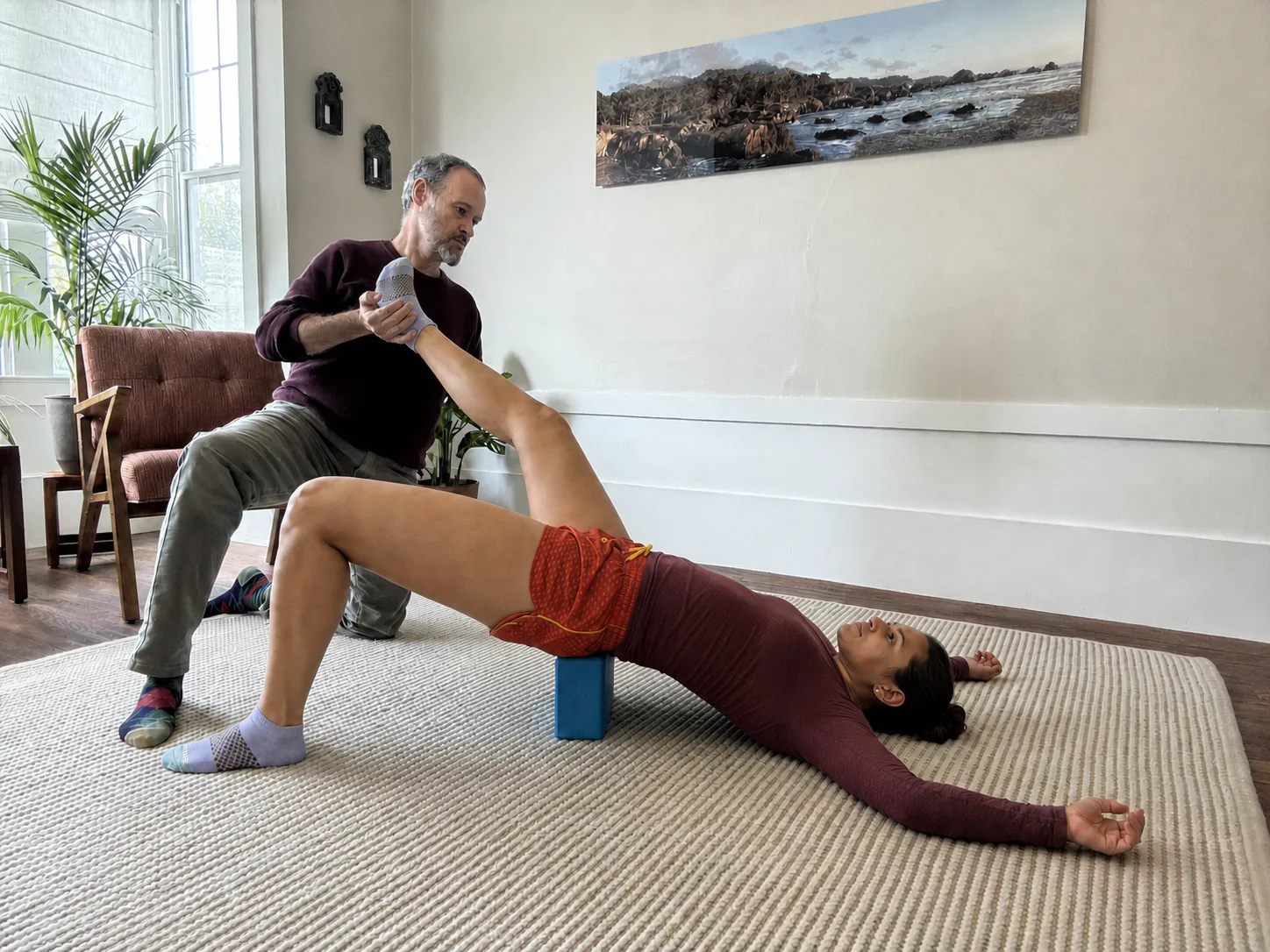
Passive bridge protocol for restoring spinal mobility
Protocol9 min read

The passive bridge: a moving meditation for tight, restricted bodies.

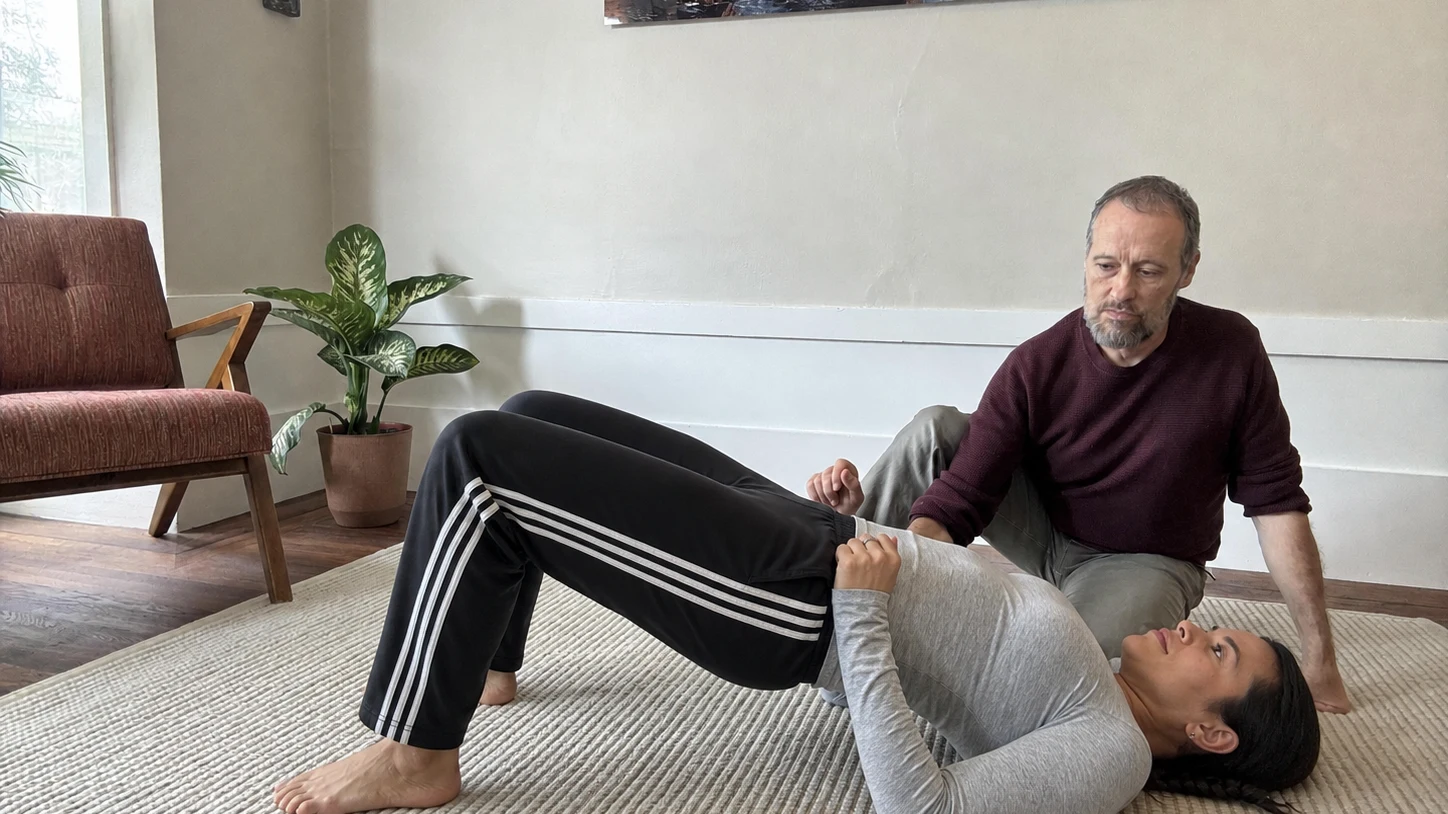
Yoga block under the sacrum. Five minutes a day. Restores spinal mobility decade by decade — slowly enough that nothing fights back, deeply enough that something actually shifts.

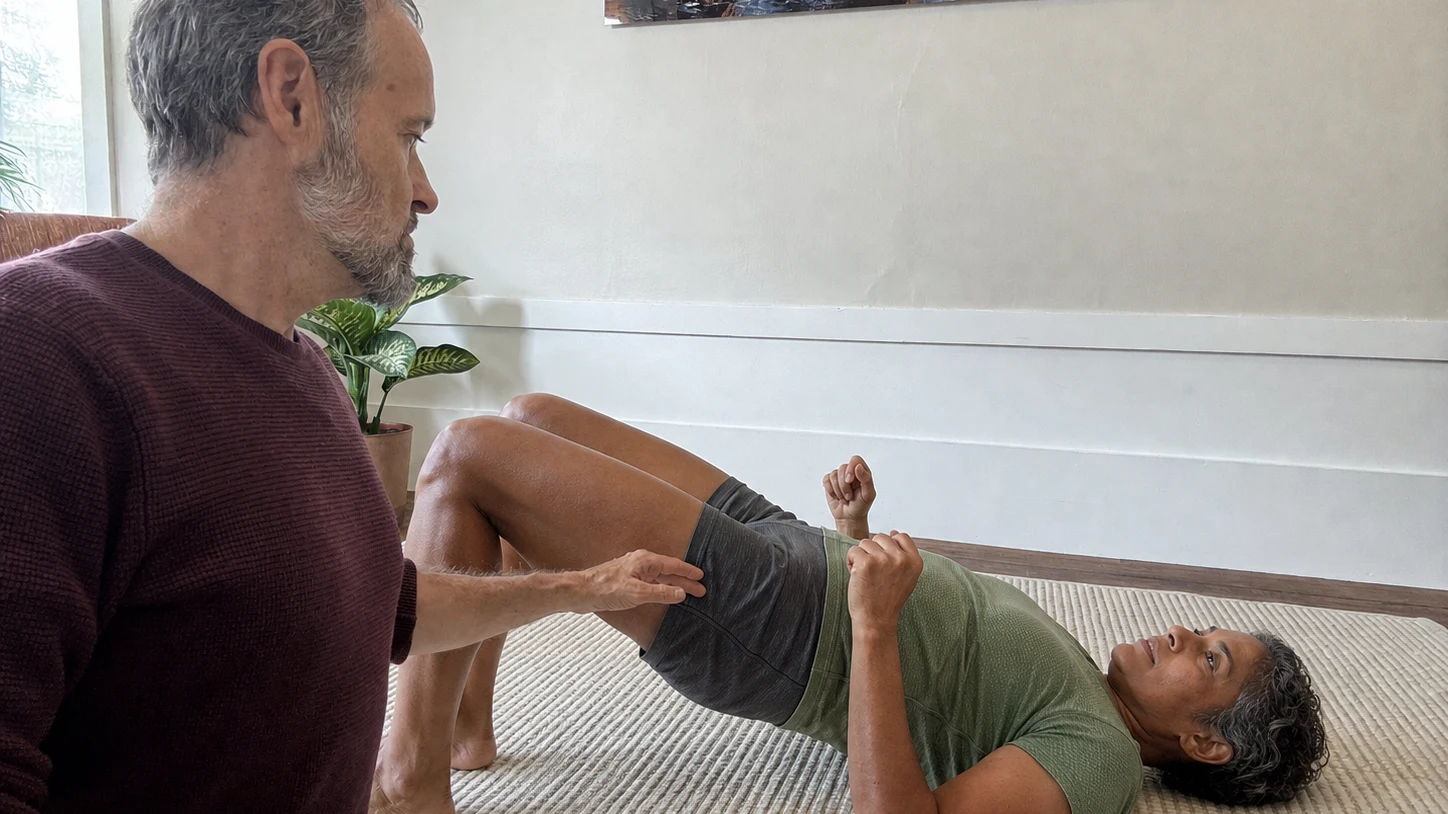
Active bridge protocol for building spinal strength and stabilizing joints
Protocol8 min read

The active bridge: build spinal strength by doing the opposite of sitting.

Where the passive bridge releases, the active bridge re-strengthens. Stabilize loose joints by training the exact opposite movement pattern your chair has trained for fifteen years.

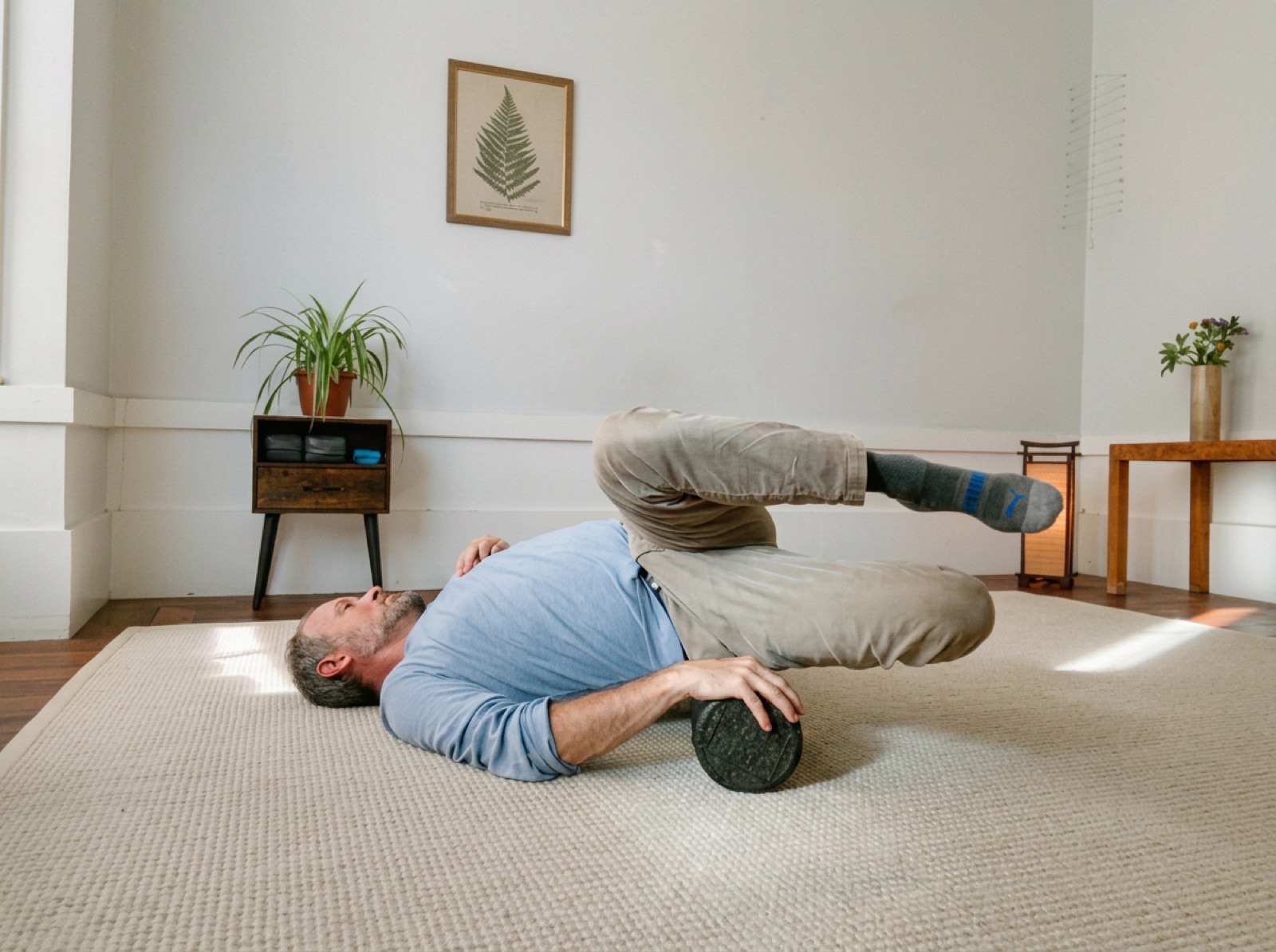
Spinal wave protocol for gentle spinal decompression and hip release
Protocol8 min read

The spinal wave: gentle decompression that resets the lower back.

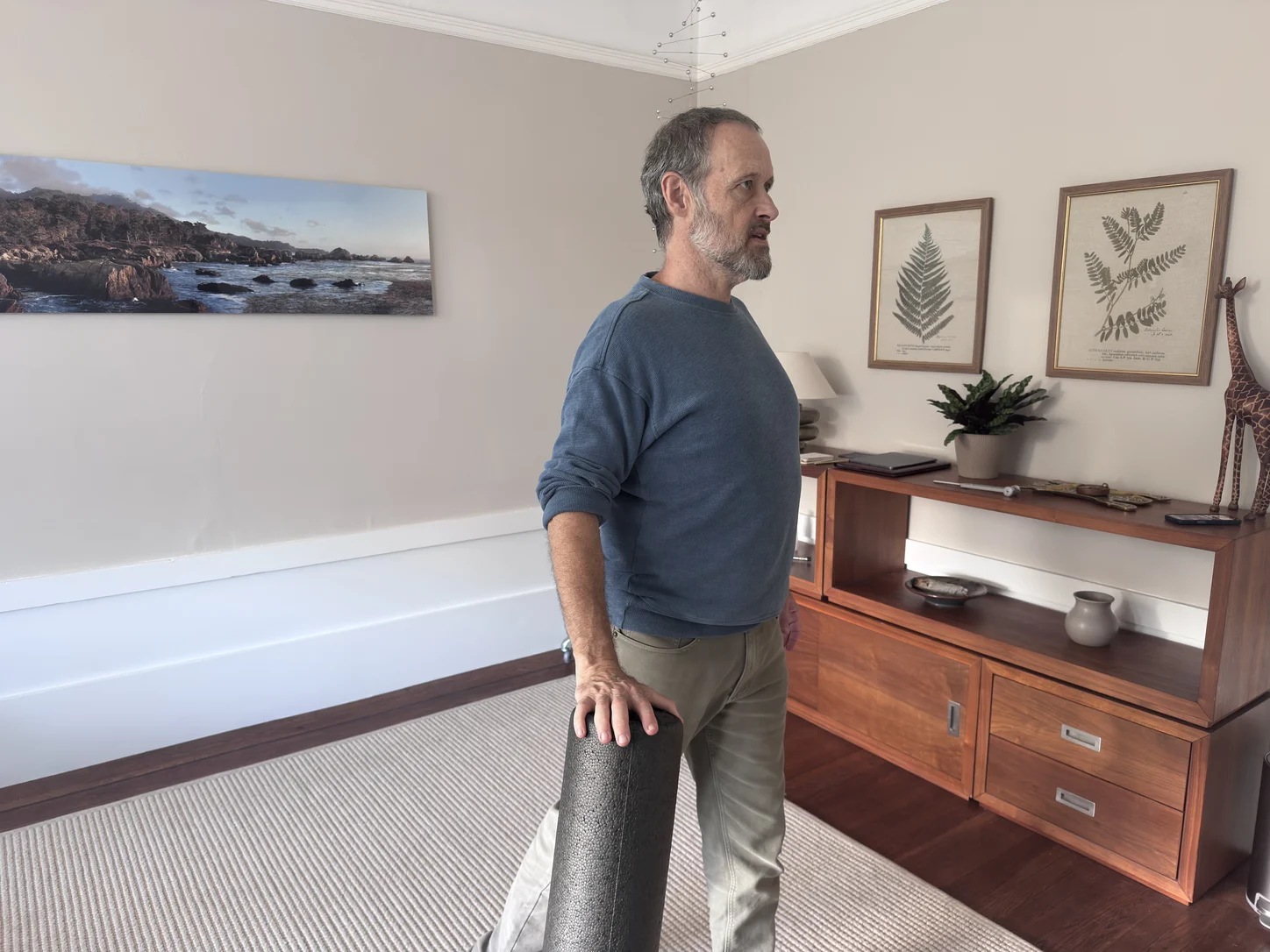
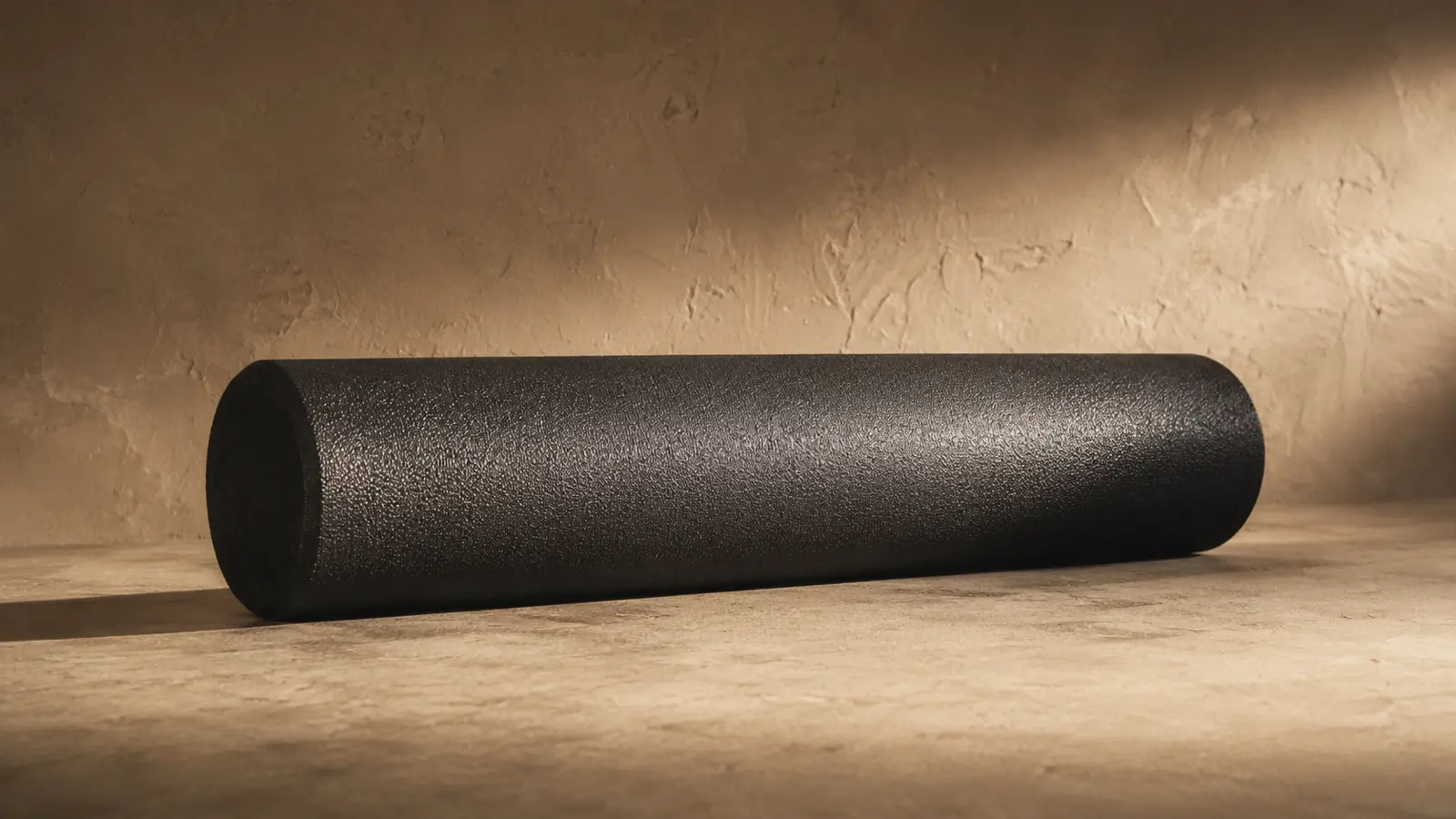
A foam roller, a few minutes, and a wave that does what stretching can't. Reverses the compression sitting creates without forcing anything.

Spring step protocol for calf and ankle decompression and plantar fasciitis relief
Protocol7 min read

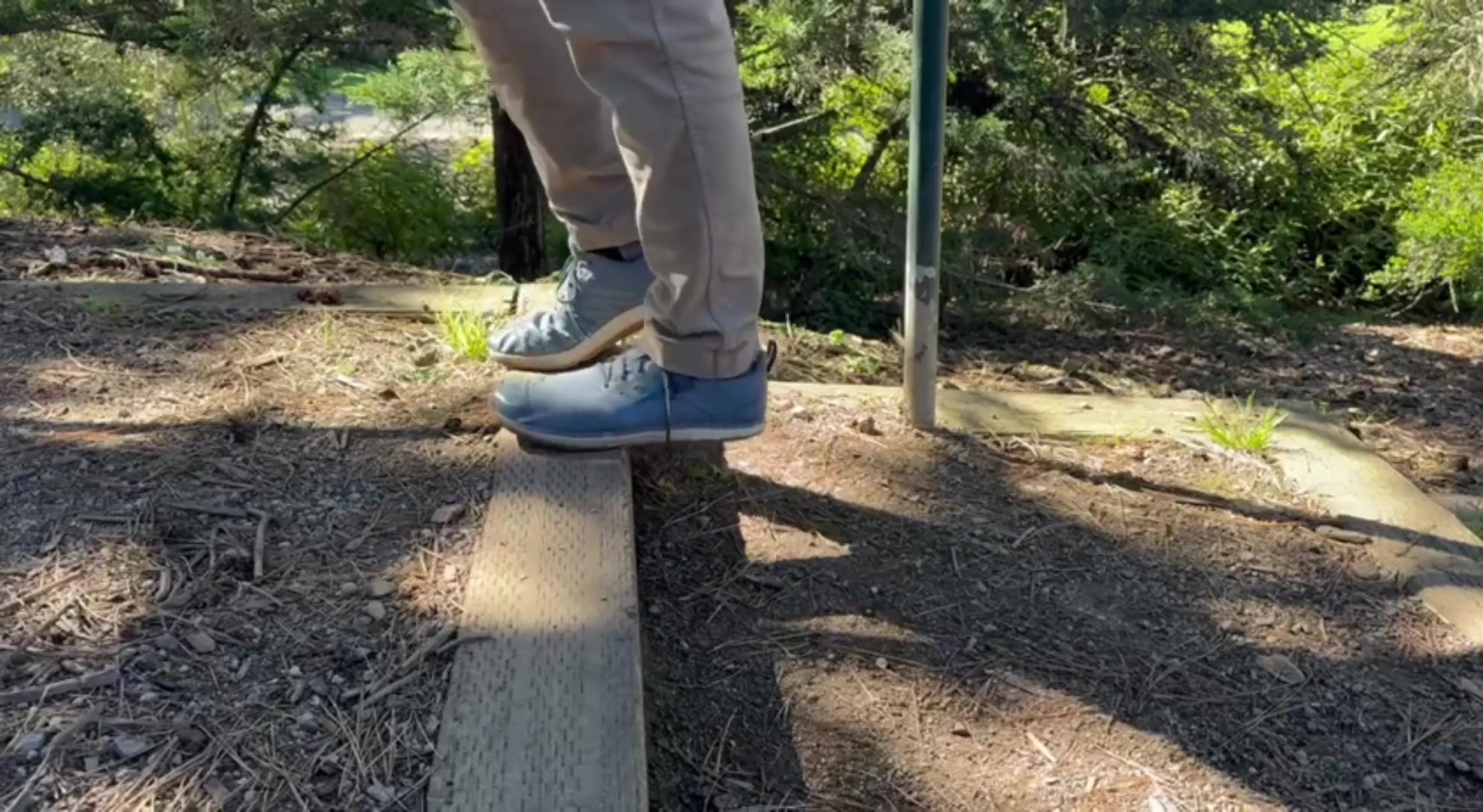
Spring step: how the ankle's lymph pump changes everything above it.

Tight calves and weak ankles affect your whole kinetic chain — including your back. Reawaken the bouncing motion in your heel that flat shoes and flat surfaces have suppressed.

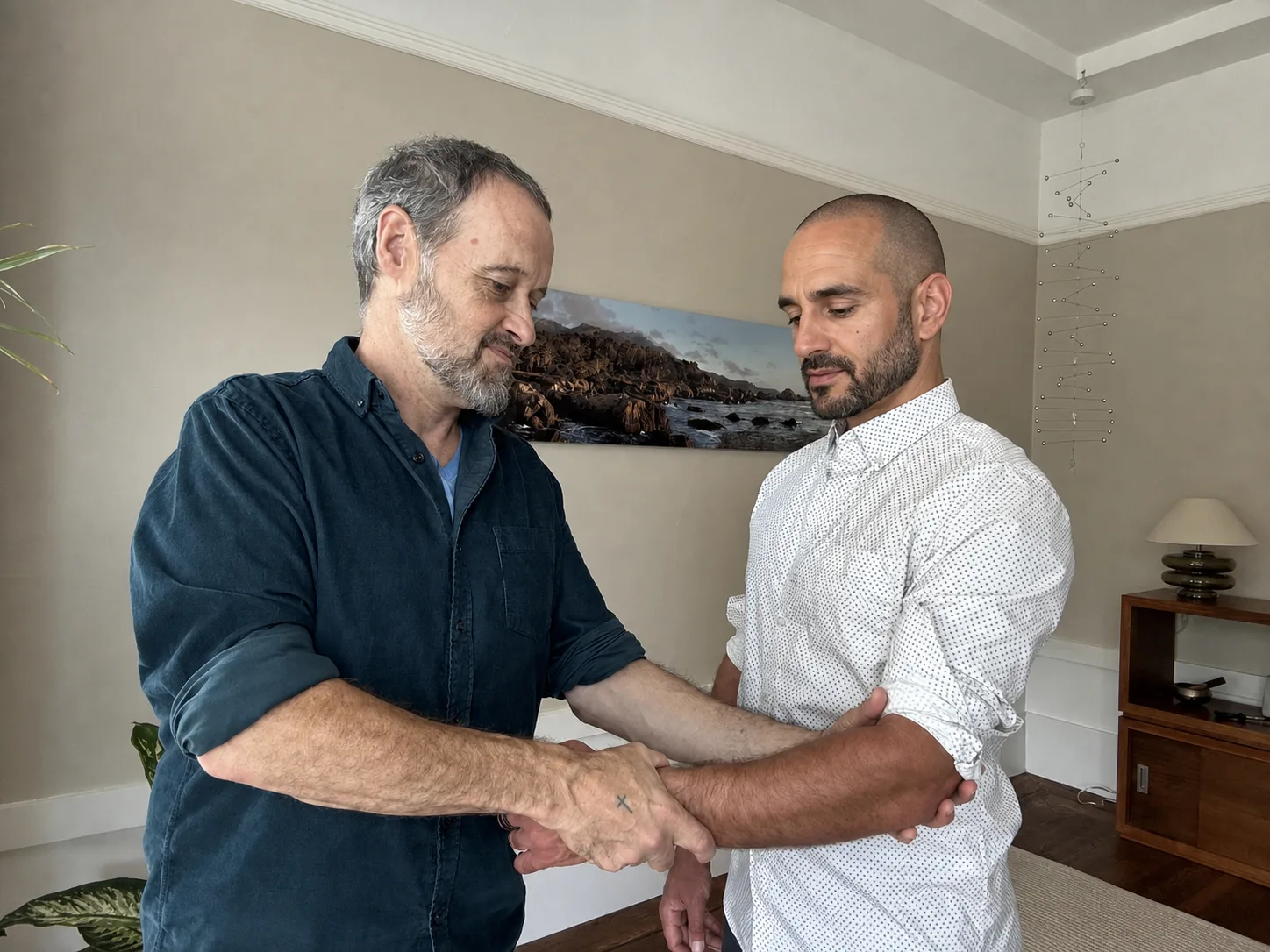
Elbow reset protocol demonstration showing proper forearm rotation technique for tennis elbow relief
Protocol6 min read

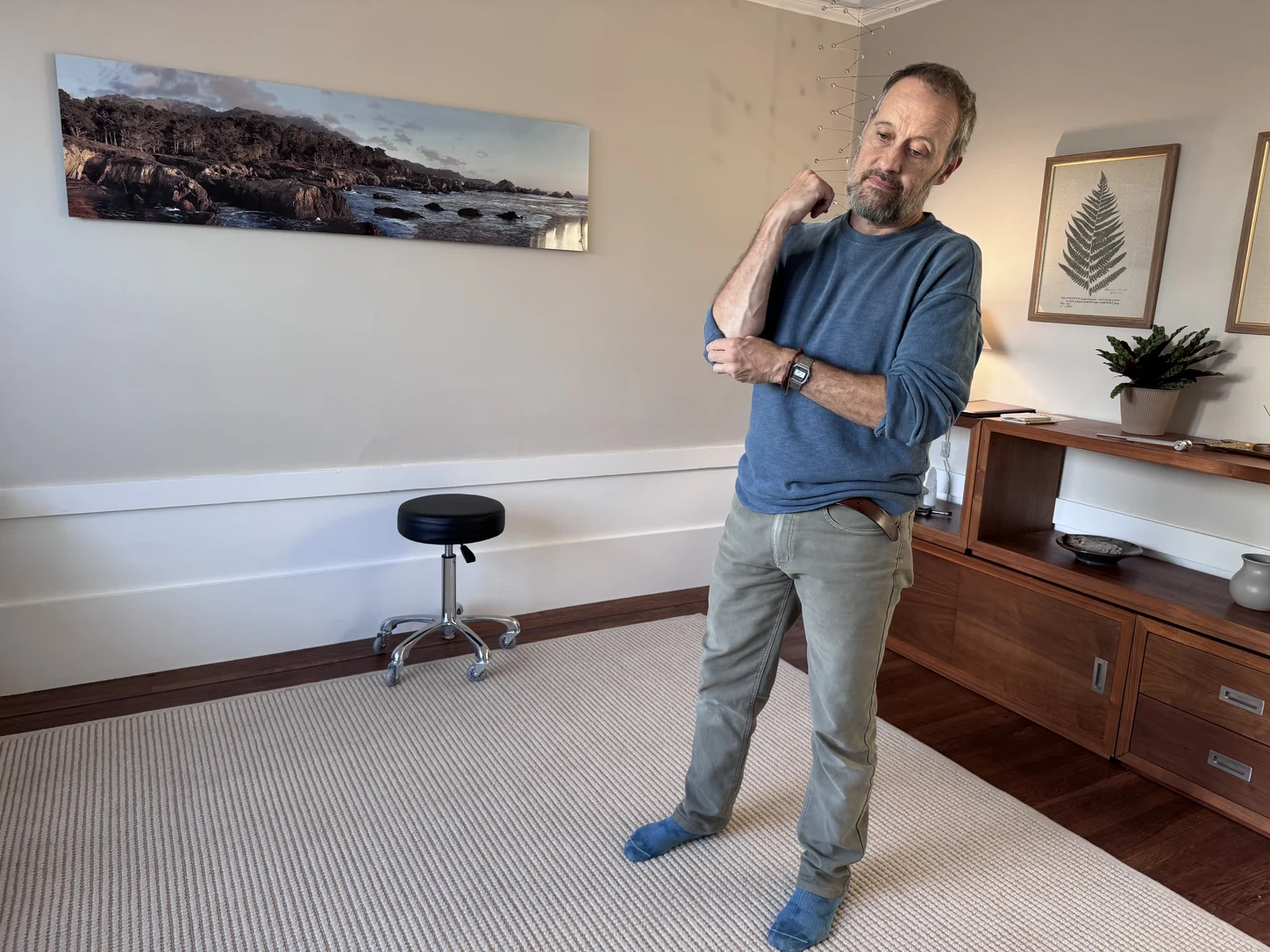
The elbow reset: a fix for tennis elbow and golfer's elbow — without rest, braces, or shots.

The forearm imbalance behind tendonitis and overuse injuries. Targets the actual mechanic, not the inflammation.

Jaw align protocol demonstration showing proper technique for TMJ relief
Protocol6 min read

Jaw Align: A Simple Protocol that Resolves TMJ Disorder

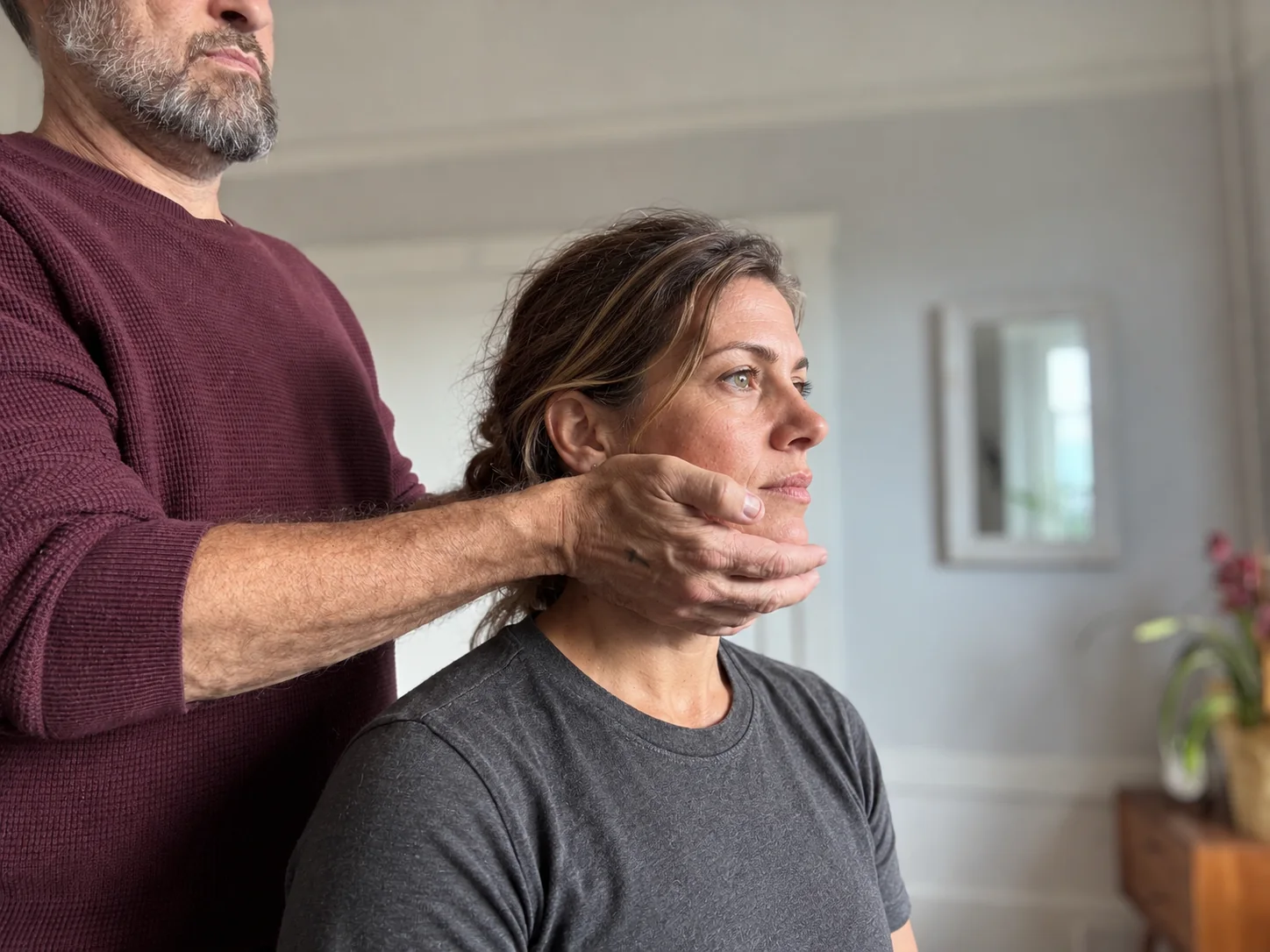
TMJ pain comes from jaw muscle imbalance, not the joint itself. Every client who's come in with TMJ has reversed it with this one protocol.

Putting the Amari Method together
Method10 min read

Putting it all together: building your own daily practice.

How the eight protocols work as a system, and how to build a practice that fits your body, your time, and the specific patterns keeping pain around.

The thinking.

6 entries
Why deep tissue massage doesn't last
Mechanics8 min read

Why deep tissue massage doesn't last.

Pressure-based bodywork lengthens tissue and changes blood flow. Within a few days the same patterns reload it. Why the cycle becomes the practice — and what changes the load instead.

Why myofascial release doesn't hold
Mechanics8 min read

Why myofascial release doesn't hold.

Fascia softens, you walk out looser, the tightness returns within a day or two. Why MFR fades — and what's actually loading the fascia upstream.

Why the psoas tightens back after release
Mechanics7 min read

Why the psoas keeps tightening back.

The psoas is the messenger, not the source. If it's chronically tight, something else stopped doing its job. Here's what's actually happening upstream.

Office chair and back pain from prolonged sitting
Conditions9 min read

Why your back hurts when you sit — and what's actually happening.

Spinal compression and tight hip flexors, not weakness. Here's what's actually happening to your back at hour four — and how to fix the cause, not the symptom.

Foam roller used for sciatica relief at home
Conditions9 min read

Sciatica isn't a nerve problem — it's a muscle imbalance problem.

What's really causing the shooting pain down your leg, and why the standard playbook (rest, stretch, ice) doesn't fix it.

Resistance bands — when stretching alone isn't relieving back pain
Mechanics7 min read

Why stretching doesn't fix what stretching is supposed to fix.

If a muscle's tight every morning by 9am, it's not short — it's compensating. Stretching a compensator is like draining a flooded basement without finding the leak.

Where it hurts.

9 entries
Dr. Garrett guiding a client through lower back pain treatment
PainSF + virtual

Lower back pain: a pelvic and hip problem.

Something is working too hard because something else isn't working enough. Find where you're out of balance and learn to correct it yourself.

Dr. Garrett guiding a client through neck pain treatment
PainSF + virtual

Neck pain is almost always a shoulder-blade problem.

Something below your neck is out of position, and your neck is absorbing the load. Change the upstream pattern and the neck stops bracing.

Dr. Garrett guiding a client through shoulder pain treatment
PainSF + virtual

Shoulder pain that doesn't respond to rest.

A shoulder-blade and upper-back problem. The shoulder absorbs forces it was never designed to carry alone — until the upstream pattern changes.

Dr. Garrett guiding a client through hip pain treatment
PainSF + virtual

Hip pain is a pelvic positioning problem.

The hip joint is compressed because the structures around it are out of balance. Change the pattern, the joint decompresses on its own.

Dr. Garrett guiding a client through knee pain treatment
PainSF + virtual

Knee pain is almost always a hip problem.

The knee is caught in the middle, absorbing forces it was never designed to handle alone. Find what's actually loading it.

Dr. Garrett guiding a client through sciatica treatment
PatternSF + virtual

Sciatica isn't a nerve problem — it's compression.

Find where your sciatic nerve is being squeezed — usually upstream in your hip or pelvis — and change the pattern that's compressing it.

Dr. Garrett guiding a client through TMJ treatment
PatternSF + virtual

TMJ pain rarely starts in the jaw.

Most TMJ comes from upstream tension in the neck, shoulders, and upper back. Change the pattern loading your jaw and it stops bracing.

Dr. Garrett guiding a client through plantar fasciitis treatment
PainSF + virtual

Plantar fasciitis is a load problem.

The foot is adapting to a load it shouldn't carry. Find why your foot is taking on more than its share — calf, ankle, hip mechanics — and change the source.

Dr. Garrett guiding a client through chronic pain treatment
ConditionsSF + virtual

When PT, chiropractic, and massage haven't ended it.

Chronic pain that returns despite treatment usually means the treatment is addressing the symptom, not the pattern. The pattern is what stays.

Body Balance Assessment Quiz
Free 2-minute assessment

Discover what's really causing your pain.

The Body Balance Assessment reveals the hidden patterns most treatments miss. Two minutes. A personalized report in your inbox. A starting point you can use today.

  • Two minutes to complete
  • Personalized report sent to your email
  • No commitment, no sales call

Reading helps. Working together helps more.

These notes will get you started. The actual change happens in session — where the protocols meet your specific pattern, your specific body, your specific history.