Sometimes the problem is not a sharp pain in one spot. Your upper back feels held. You want to turn, reach or open your chest, but the whole area seems to move as one piece.
You may try pulling your shoulders back, stretching harder or sitting taller. Each can change the position for a moment. The more useful question is what helps you move with less effort once you stop concentrating on the correction.
In Amari, upper-back work involves both engagement and release. Garrett helps you find where to put effort, where to soften and how the movement changes with support and breath. The goal is less pain and more freedom in the movements you use throughout the day.
What feels difficult when you turn or reach
You may be able to lift your arms or turn your head, yet still feel held through the middle of your upper back. Reaching behind you or turning to one side can feel as though your whole torso has to come along.
That is worth describing in its own terms. Where do you feel held? Is turning different from reaching? Do you feel as though your shoulders are doing all the work? What changes when your arms are supported?
Those differences help us work toward the movement you want back. A position that looks right is not enough if you still feel just as restricted.
Pulling harder can hide what you are trying to feel
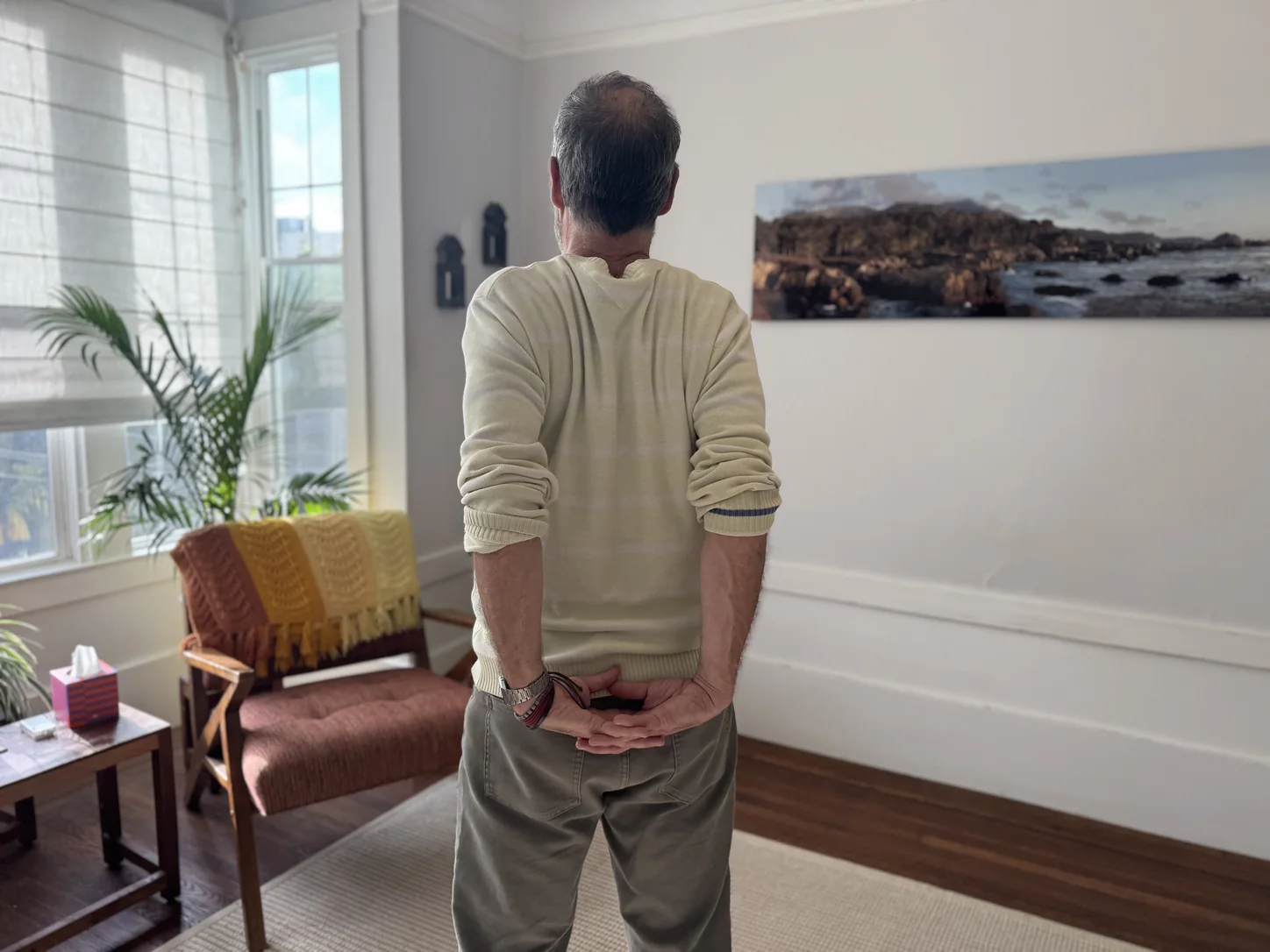
The Power Posture article introduces a movement involving the shoulder blades. The important part is not only getting your hands behind your back.
In Garrett's session guidance, he pays attention to where the action comes from. He corrects locked elbows, asks for softness in other joints and brings breath into the position. The client is learning to distinguish engagement around the shoulder blades from tightening the whole body to hold a shape.
That difference can be subtle. Slower movement gives you time to notice it. Hands-on guidance can make the direction clearer. Less range can sometimes make the action easier to find than pushing to the farthest position available.
Read the Power Posture article for more about this movement.
Support can give you another starting point
Not every movement begins with asking you to engage more. The Vertical Drop article describes a different part of the practice: arranging support so that you can work on letting go of a familiar holding pattern.
This is why a cue such as relax your shoulders is often too vague on its own. It names the result you want without showing you how to find it. Garrett can help you find an opening that also feels supported, so you are not relying on a constant effort to keep your chest open. You compare how it feels before and after the change.
Power Posture and Vertical Drop are not competing answers to upper-back stiffness. They offer different ways into the work. Which one is useful, and how it is adapted, depends on your response in the session.
Read about the Vertical Drop.
Breath belongs to the movement
In Garrett's teaching, breathing is part of how a person moves and notices change. He may ask someone to slow down or breathe while finding a particular action, then ask what feels different.
You do not need to make every breath bigger or force your chest open. The work is in noticing how the breath and the movement fit together without adding strain. That is more specific than taking a deep breath while continuing to hold everything else rigid.
As you find movements that help, you have something you can return to when the stiffness builds. The practice can change as you become more familiar with it: a position that initially needs a lot of guidance may lead to smaller changes you can recognize yourself. The goal is to turn and reach more freely and get through your day with less pain.
Give persistent pain appropriate attention
Upper-back discomfort should not automatically be blamed on desk work or posture. If pain persists, worsens, follows an injury or concerns you, seek medical advice. Get urgent medical help for sudden chest pain that does not go away, or chest pain with shortness of breath. See the NHS chest-pain guidance for more detail.
Amari does not diagnose or treat medical conditions. To work on pain and restricted movement with Garrett, start with a private Assessment.