If you're dealing with chronic pain, you've probably been told to try physical therapy. Maybe you already have, and it helped for a while, or it didn't help at all. Now you're looking at what else is out there and wondering how the Amari Method compares.
The short version: physical therapy gives you a prescription. The Amari Method gives you a scaffolding for discovery. Here's an honest comparison of how the two differ, where each works best, and how to know which is right for you.
The core difference
Physical therapy gives you a prescription. A licensed therapist evaluates the area that hurts, diagnoses what's weak or stiff, and prescribes what you should do about it. You follow the protocol. The therapist owns the diagnosis. Your job is compliance. When the pain comes back, and for chronic pain it often does, the path is another evaluation and another prescription.
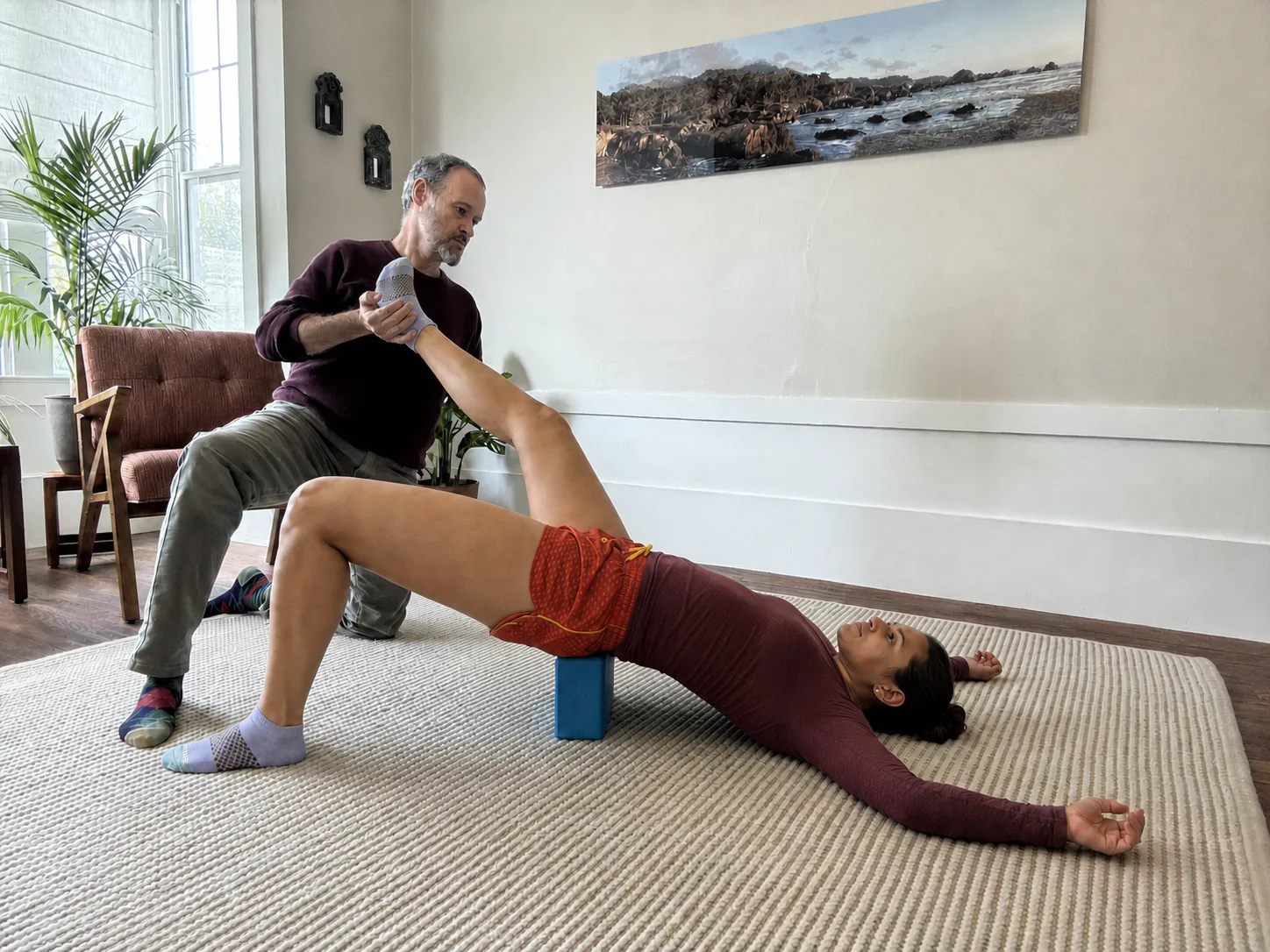
The Amari Method gives you a scaffolding for discovery. Garrett's job isn't to tell you what's broken. It's to guide you to feel where your body has gone out of balance, why, and what lets it release. Each session is one rung of a structure that lets you see the pattern. By the end of your series, the scaffolding is internalized. You stop needing a practitioner because you've learned to read your own body.
Physical therapy optimizes for the therapist's expertise. The Amari Method optimizes for yours. That's why it works for people who've been through years of treatment and the pain keeps coming back: they were never the expert on their own body, so the moment supervision ended, the pattern returned. Scaffolding stays after the practitioner leaves.

Putting it all together
Why stretching doesn't resolve back pain
How they compare
| Physical Therapy | Amari Method | |
|---|---|---|
| Approach | Prescriptive: treats the painful area directly | Discovery: finds what's out of balance and driving the pain |
| Practitioner's role | Owns the diagnosis, prescribes the program, you comply | Guides you to find your own pattern; you become the expert on your body |
| Assessment | Range of motion, strength testing, pain at the site | Full-body assessment: pelvis, hips, spine, shoulders, to find where you're out of balance |
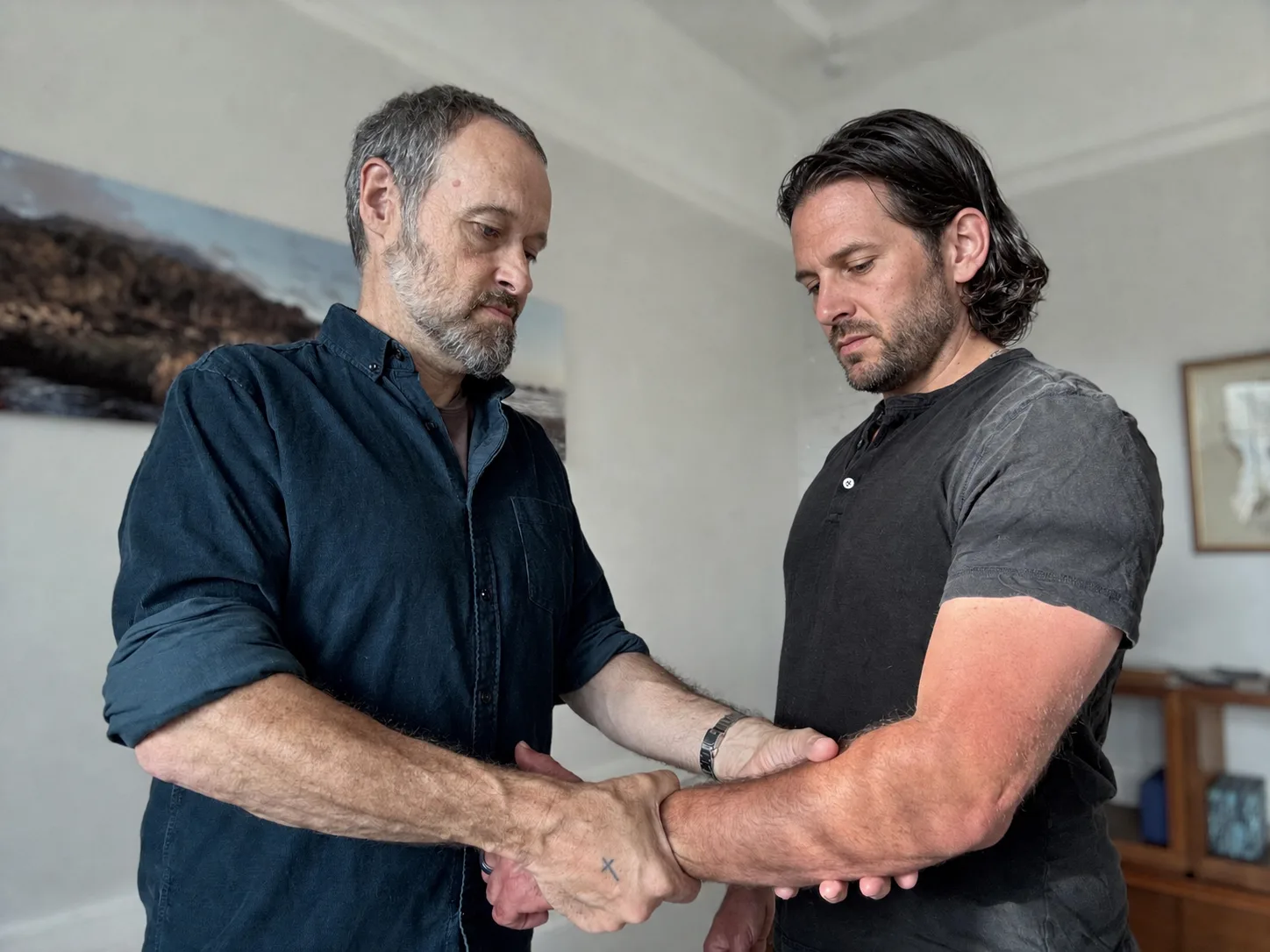
| Treatment | Exercises, stretching, manual therapy, modalities | Hands-on alignment work plus guided protocols you learn to do on your own |
| Typical timeline | 12–20 sessions over 3–5 months | A complete practice is recommended after an in-person Assessment |
| Session length | 45–60 minutes, often shared with other patients | 50–60 minutes, one-on-one with Garrett |
| After treatment ends | Maintenance exercises, periodic return visits when pain comes back | You keep the scaffolding: the pattern recognition and the protocols stay with you |
| Insurance | Usually covered, with copays and visit limits | Not billed directly. A superbill is available on request. |
| Best for | Post-surgical rehab, acute injuries, insurance-covered care | Chronic pain that hasn't responded to other treatment, recurring pain, a body that's out of balance |
When physical therapy is the better choice
After a knee replacement, rotator cuff repair, or spinal surgery, physical therapy provides the structured recovery protocol your surgeon prescribes.
A fresh sprain, strain, or fracture benefits from physical therapy's progressive loading approach.
If cost is a primary concern and you have PT coverage, it's a reasonable starting point, and it provides structured guidance if you're deconditioned or recovering from a long period of inactivity.
Physical therapy is a prescription. The Amari Method is a scaffolding for discovery.Garrett
When the Amari Method is the better choice
This is the most common scenario we see. The pain improved during treatment but returned weeks or months after discharge, because the pattern underneath it was never addressed.
If you've had pain for months or years, it's almost certainly a body that's out of balance, not an injury that just needs time and strengthening. Pain that moves, first your back, then your hip, now your neck, is a classic sign your body is shifting load from one area to another. The Amari Method traces these patterns back to their source.
The work is designed to resolve the issue in a series of 4 or 8 sessions, not manage it over months of appointments, and every session teaches you what's happening mechanically so you can maintain the correction yourself.
Can you do both?
Yes, but most people don't need to. The Amari Method includes its own protocol practice, tailored to where your body is out of balance, not a generic strengthening routine. Practice Members often find the corrective protocols replace what they were doing in physical therapy. If you're currently in physical therapy and considering the Amari Method, you don't need to stop PT first. Garrett can assess whether the two approaches complement each other or whether it makes sense to transition.
Not sure which is right for you? Take the free quiz before you commit to anything.

Garrett has spent 25+ years in hands-on practice. He built the Amari Method after using its own protocols to resolve his own carpal tunnel and plantar fasciitis.