Amari Method / Conditions / Myofascial Release / San Francisco
Field Notes · From the practice

Why myofascial release doesn't hold.

MFR works on fascia directly — pressure, sustained holds, glide. The fascia softens. You feel different leaving the table. Within a day or two, the tightness returns. Here's what's actually happening: fascia tightens because something else is loading it. Until that load changes, the tissue keeps responding the way it has been. Releasing without addressing the source is the cycle, not the cure.

25+ years of clinical practice First session guaranteed San Francisco + virtual
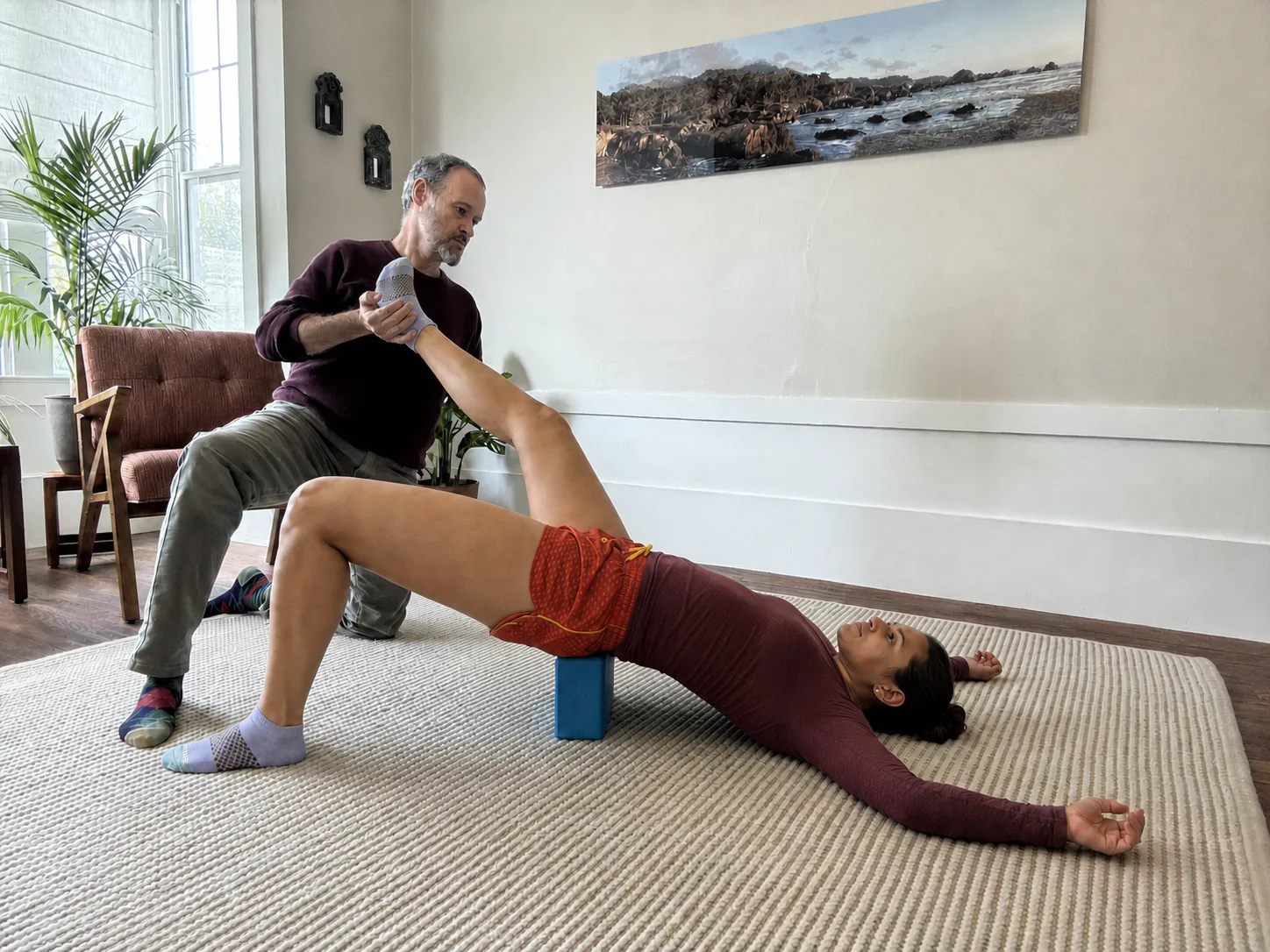
Dr. Garrett Hewstan guiding a client through an Amari Method session in San Francisco
Dr. Garrett Hewstan In session · San Francisco
Why fascia keeps tightening

Fascia tightens for a reason. The reason is upstream.

01

Your fascia is responding to a load

Fascia is plastic. It adapts to what's asked of it. When parts of your body stop doing their job, other parts overwork — and the fascia in those areas tightens to protect the structure. Tight fascia in your hip, IT band, or back is the body's adaptation. Releasing it directly without changing the load is asking it to stop adapting to something that's still happening.

02

Why generic MFR doesn't last

Standard myofascial release, structural integration, fascial stretch therapy — all address where the fascia has tightened. None of them ask why. As soon as you stand up and walk back into your normal patterns, the fascia tightens again because the load that created the tightness hasn't changed.

03

The lasting release happens at the load

Once Dr. Garrett identifies which parts of your body have shut down and brings them back online, the fascia in the overworking areas no longer has anything to grip against. It releases on its own. The change holds because nothing is asking the fascia to compensate anymore.

This is exactly what your first session finds.

Book your first session — $225

First session guaranteed · In person SF or virtual

The pattern

Where fascial tension actually comes from.

Fascia is responsive tissue. It tightens when it's asked to. The work is in changing what's asking.

01 PATTERN LOAD

The pattern is loading your fascia.

Your body is out of balance — parts overworking, parts shut down. The fascia in the overworking areas takes on more load than it should. That's where it tightens. The pattern is the source. The fascia is the receipt.

02 TISSUE ADAPT

The fascia adapts to protect you.

Tight fascia isn't broken fascia. It's fascia doing exactly what it's designed to do: stiffen to handle the load. The IT band, the thoracolumbar fascia, the plantar fascia — they tighten because something nearby has stopped pulling its weight.

03 LOAD CHANGES RELEASE

Change the load. The fascia changes.

When the part of your body that should be doing the work comes back online, the overworking area no longer needs to hold. The fascia softens. The release isn't manual. It's structural. And it stays.

What happens in your first session.

Full assessment, guided protocols, and a take-home practice. 60 minutes.

01

Assessment

Dr. Garrett assesses how your body moves. Where it's overworking, where it's shut down. He's looking at your whole body, not just the part that hurts.

02

Guided protocols

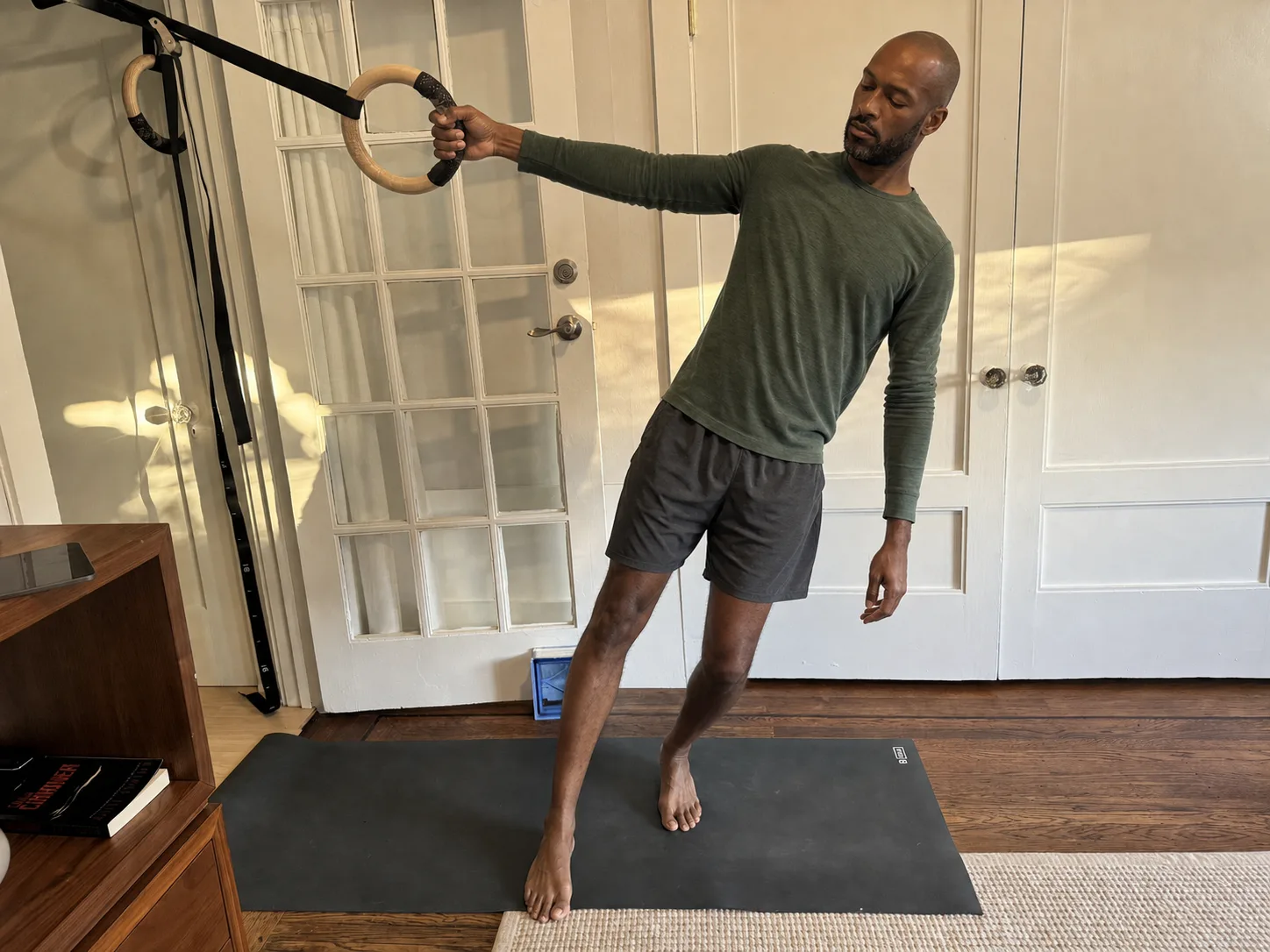
Using simple props (yoga blocks, foam rollers, gymnastic rings), Dr. Garrett guides you through protocols adapted to your body in real time. You're not lying on a table. You're moving, finding positions where your body starts to rebalance itself.

03

What changes

Most clients feel a noticeable shift during the first session. The overworked areas release. The underworked areas start to re-engage. You feel the difference before you leave.

04

Take-home practice

You leave with a short practice for what was worked on that session. About five minutes. You do it on your living room floor. It maintains the changes and keeps your body moving in the right direction between sessions.

Virtual sessions work well for fascial work. Because the work is in finding the pattern that's loading your fascia, not in hands-on tissue manipulation, video translates cleanly. Dr. Garrett assesses your posture and movement via live video and guides you through positions that change the load. Most clients notice their fascia softening during the first virtual session.

People who came in with the same thing.

"
I really have tried everything. Nothing has ever come close to this.
Pam
Pam Business Owner
"
I follow his protocol every day. 8 months no pain.
Marisol
Marisol Teacher
"
I thought pain was just part of getting older. I wish I'd met Dr. Garrett ten years sooner.
Annie
Annie Renewed
The guarantee

Most clients feel a difference in their first session.

Book a session with Dr. Garrett. If you don't experience noticeable relief, we keep working with you until you do, at no additional charge.

$225 · First session · San Francisco + virtual
HSA / FSA accepted · Affirm available — series as low as $108/mo

Common questions.

If something isn't here, ask on a free discovery call. Dr. Garrett answers everything before you book a paid session.

How is this different from standard myofascial release?

+
Standard MFR works directly on the fascia — sustained pressure to release adhesions and tight tissue. It works in the moment. The problem is that fascia doesn't tighten randomly. It tightens because the body is using it to compensate for something else. The Amari Method finds what your fascia is compensating for and changes the load. The fascia releases on its own because it no longer has a reason to grip.

Is this Rolfing or structural integration?

+
No. Rolfing and structural integration work systematically through the fascia in a multi-session series, with the practitioner doing the work on you. The Amari Method works on the mechanical patterns loading your tissue — and teaches you the work so you can maintain it yourself. You're not lying on a table getting worked on. You're moving, finding positions where your body rebalances itself.

Do you do FST or fascial stretch therapy?

+
FST is a specific assisted-stretch modality. The Amari Method is closer in mechanism — both address fascia through movement rather than pressure — but the focus is different. FST stretches tissue. Amari finds why the tissue is short in the first place and changes that. The stretch becomes self-sustaining.

I've had MFR before and it doesn't last. Why would this be different?

+
Because most MFR addresses the symptom, not the load. If the parts of your body that should be doing the work are still shut down, your fascia will tighten back up within days as the same compensation kicks in. Dr. Garrett finds which parts have shut down, brings them back online, and removes the demand on your fascia. The release lasts because the demand has changed.

Can fascia really change?

+
Yes. Fascia is plastic — it adapts to the loads it's under. It tightens to protect, lengthens to release, remodels over time. The question isn't whether fascia can change. It's whether the changes hold. They hold when you remove what's loading the fascia in the first place. They don't when you only address where it's tight.