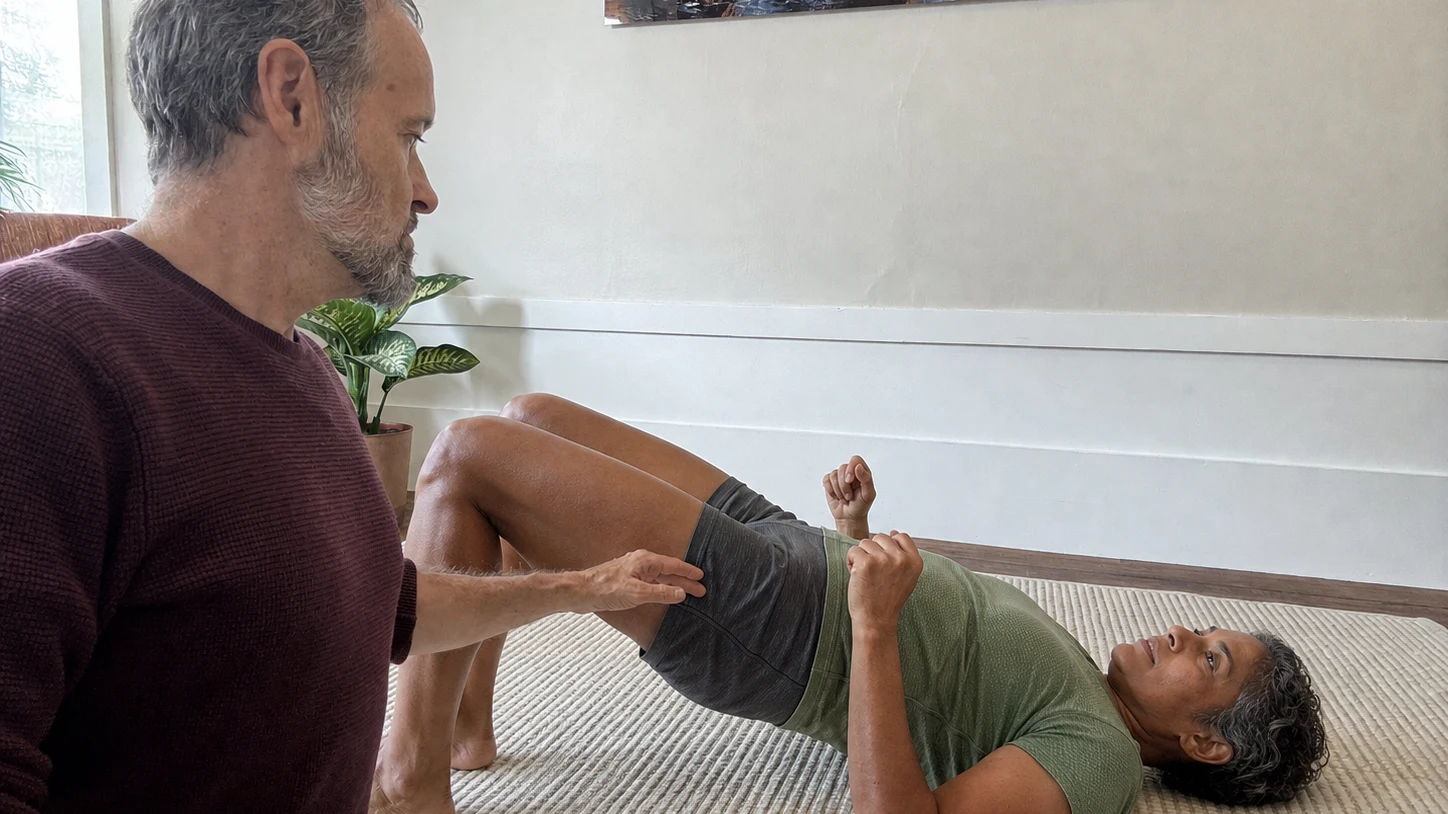
Most people who come to Garrett with chronic low back pain assume they're tight. They stretch and foam roll, and the pain keeps coming back, because the problem was never tightness. The problem is that their joints are too loose, and the muscles around those joints aren't strong enough to hold them in place.
When you can move easily but your joints are crunching and compressing, that's not flexibility. That's instability, and instability is what's keeping you in pain. The active bridge builds real strength in the spine and pulls the joints back into the musculature where they belong.
There are two systems in the body: the active system (muscles and tendons) and the passive system (bones, discs, and ligaments). Picture a skeleton hanging in an anatomy classroom. It's passive. It needs the active system to move it.
When the two systems are in balance, the muscles hang on the bones in a way that feels effortless. When they're out of balance, which is most of us after a day spent flexed over in a chair, the passive system ends up working too hard. That's where disc herniations and nerve pain come from. The bones are doing the work the muscles should be doing.
If your joints move easily but without control, that imbalance is worse. You're cranking on the joints instead of using the muscles around them to hold those joints in place. That's exactly what the active bridge addresses.
The active bridge is the opposite of sitting in a chair. Sitting rolls everything, shoulders, spine, hips, into flexion. The active bridge reverses that, pushing the pelvis, hips, and low back into a neutral position.
It isn't a standard gym bridge held for time. The way Garrett teaches it, you build strength and awareness together, learning to feel where your body is in space, which is something most people with loose joints have lost.
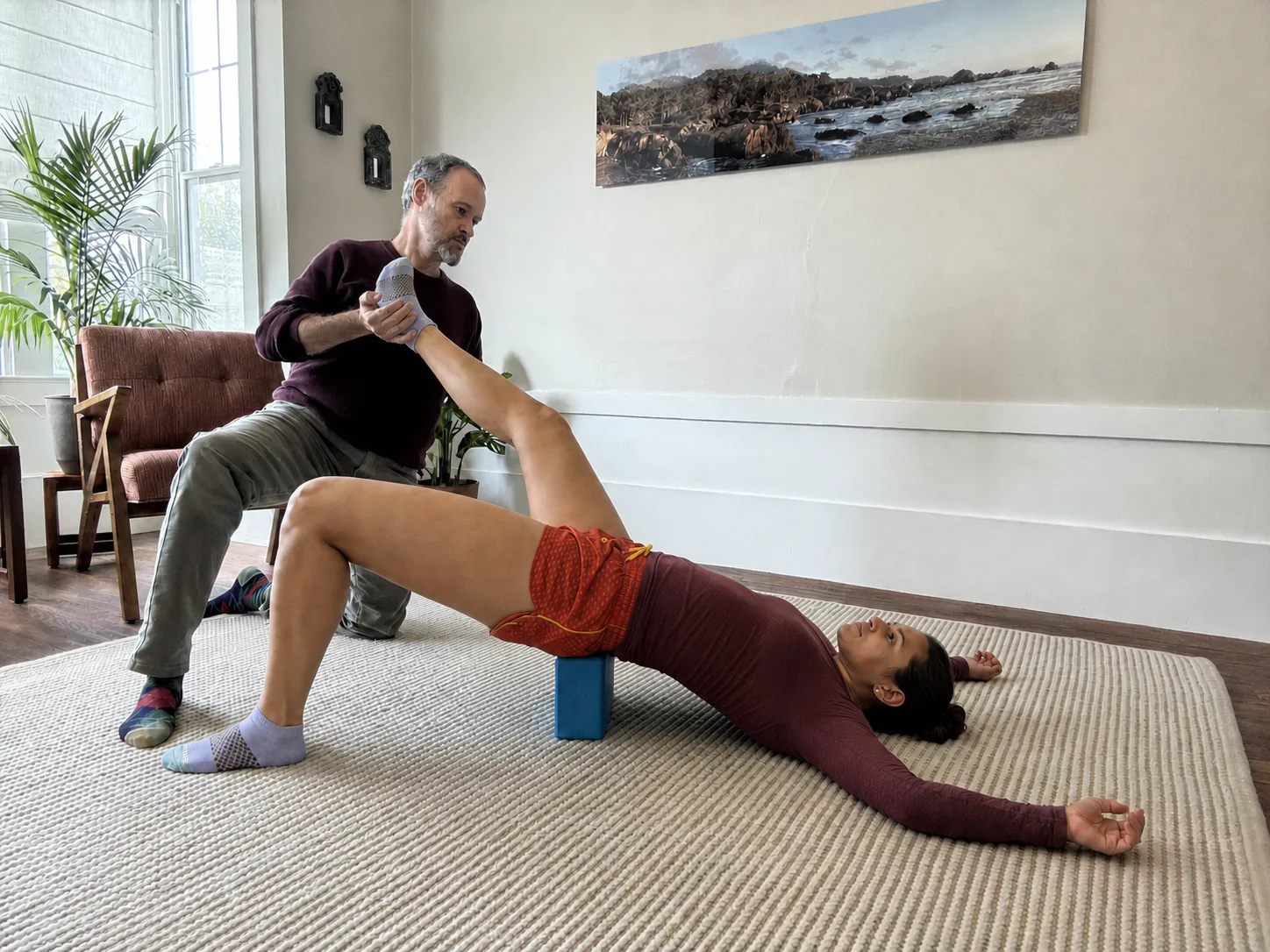
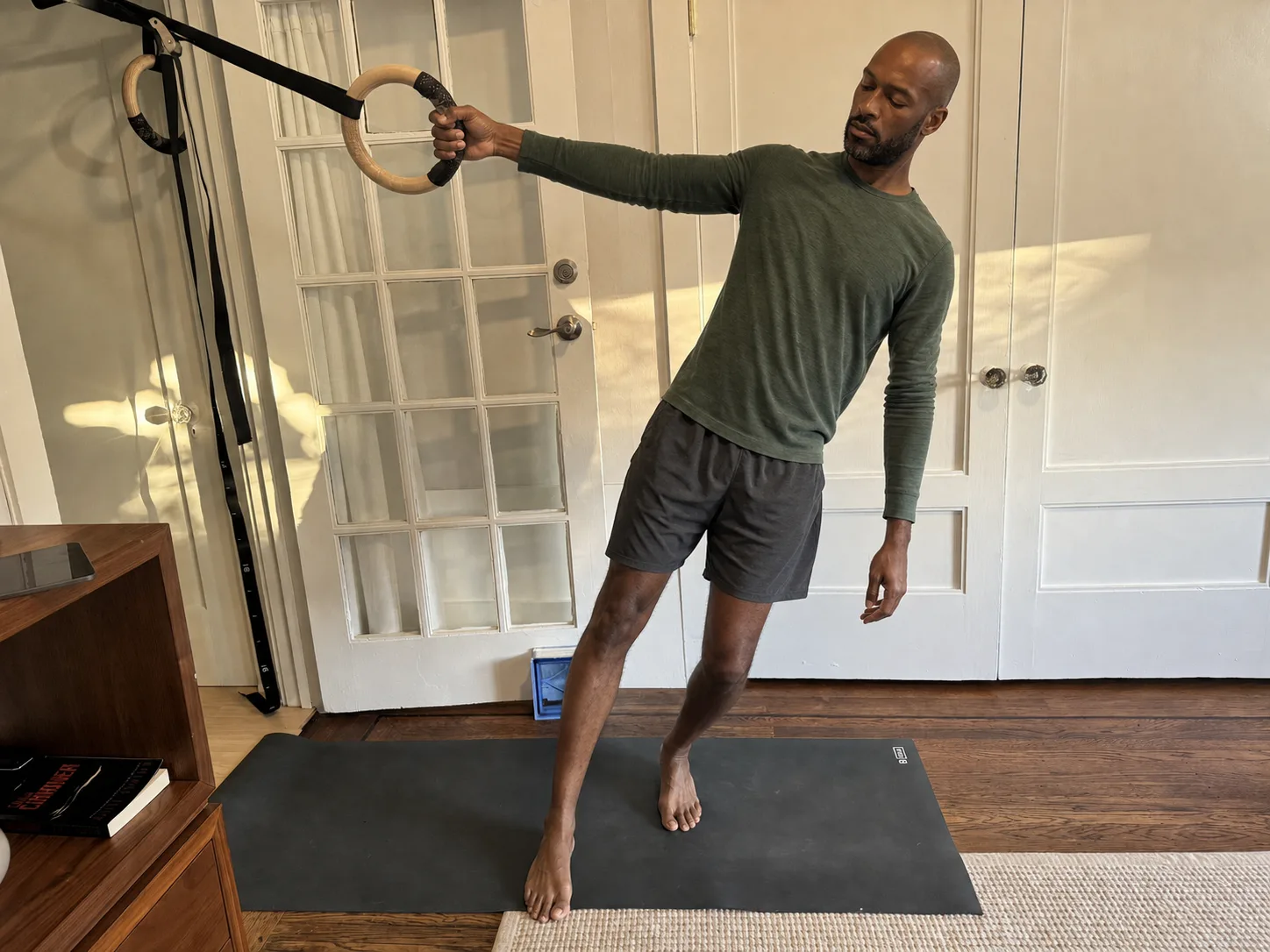
The details matter enormously here. How you create a muscular platform with your shoulder blades so the spine isn't bearing the load. The angle and quality of the movement. Whether you're working at the top of your range or the bottom. Getting these wrong is the difference between building real stability and stressing the low back further, which is why the protocol needs to be taught in person, not read off a screen.
Almost everyone rests on their spine instead of creating the platform with their shoulder blades. It feels right, but the protective effect disappears. Garrett has to watch you do it to see whether you're actually in position.
Most people go too fast and the bridge becomes mindless. Slower is better. You can build strength with a faster movement, but you won't build the awareness the protocol is actually for.
If your joints move easily, doing a passive, restorative bridge creates more passivity in the body. You don't need more range of motion. You need the strength to control the range you already have.
If you're tight and restricted, the active bridge may not be the right starting point. You may need to restore some mobility first before building strength on top of it. Most people end up doing a combination of both, but the ratio matters, maybe 70/30 one way or the other. That gets figured out together in the first session.
I've been doing this work for 25 years, and I have never seen change like these bridges bring, for myself and for my clients.Garrett
Sessions happen on a mat, not a table, using simple props like yoga blocks and foam rollers. Garrett watches the shoulder blade platform and the quality of the movement in real time, since both are nearly impossible to self-correct.
Virtual sessions work the same way. The active bridge is a movement and awareness protocol, not hands-on work, so it translates cleanly over video. Garrett assesses your position and guides you through the same setup.
If your joints move easily but nothing feels stable, we can help. See how the Amari Method builds the strength that holds you in place.
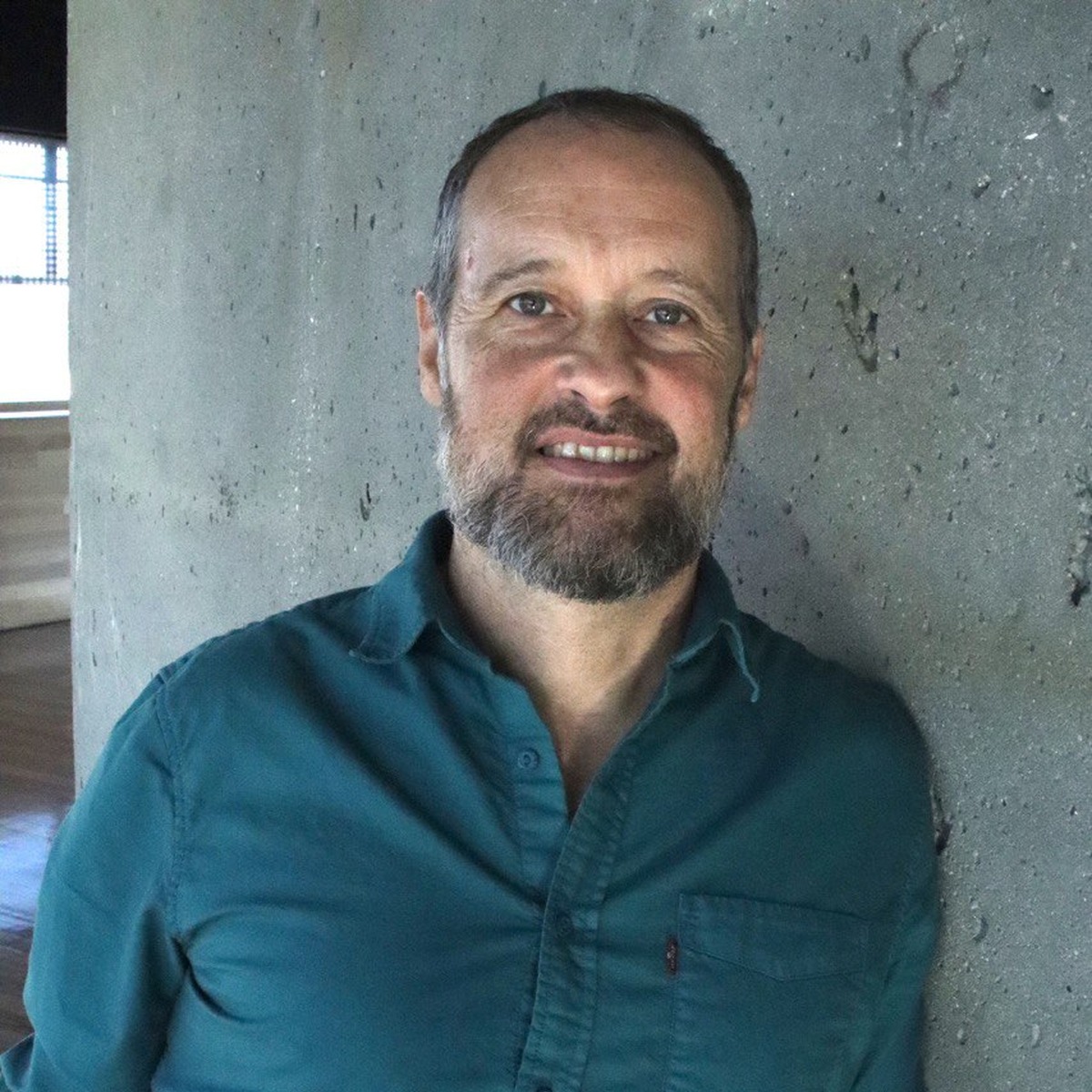
Garrett has spent 25+ years in hands-on practice. He built the Amari Method after using its own protocols to resolve his own carpal tunnel and plantar fasciitis.
Book a session with Garrett. If you don't experience noticeable relief, we keep working with you until you do, at no additional charge.
$29 · Amari Assessment · 50 minutes · San Francisco